

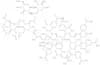
CAS 9004-35-7
:Cellulose acetate
Description:
Cellulose acetate is a synthetic polymer derived from cellulose, characterized by the substitution of hydroxyl groups in cellulose with acetate groups. It is a thermoplastic material, meaning it can be molded and shaped upon heating. Cellulose acetate is known for its clarity, flexibility, and resistance to oils and greases, making it suitable for various applications, including film production, coatings, and fibers. It is biodegradable, which is an advantage over many synthetic polymers, and is often used in the production of biodegradable plastics. The degree of substitution of the hydroxyl groups affects its properties, such as solubility and thermal stability. Cellulose acetate can be processed into films, sheets, and fibers, and is commonly used in the manufacture of photographic films, eyeglass frames, and cigarette filters. Additionally, it has applications in the textile industry as a fiber, known as acetate rayon. Overall, cellulose acetate is valued for its versatility and environmentally friendly characteristics compared to traditional plastics.
Formula:C2H4O2·xUnspecified
Synonyms:- 360E16
- Acetose
- Acetylcellulose
- Allogel
- Asechi
- Bioden
- Ca-Ref
- Cellidor
- Celluloseacetat
- Crellate
- Dp-Iii
- Duoflux
- FM
- FRK
- MGM
- Mfa-M
- Mfa-Ma
- Mfas-G
- Millipore
- Nicollembal
- Plastacele
- Plastacetat
- Pr-Ca
- Rhodoid
- Separax
- Stripmix
- Strux
- T-Cellit
- Tartan
- Tenex
- UAM
- Ultraphan
- VBF
- VFY
- Acetate cotton
- Cellulose, acetate
- Ampacet C/A
- Cellulose acetate
- See more synonyms
Sort by
The purity filter is not visible because current products do not have associated purity data for filtering.
Found 3 products.
Cellulose acetate - MW 30,000
CAS:Cellulose acetate fiber is one of the earliest synthetic fibers and is based on cotton or tree pulp cellulose. Cellulose acetate is used as a film base in photography, as a component in some coatings, and as a frame material for eyeglasses. It is also used as a synthetic fiber in the manufacture of cigarette filters and playing cards. In photographic film, cellulose acetate replaced nitrate film in the 1950s, being far less flammable and cheaper to produce but in recent years has been rendered obsolete by the advent of digital cameras.Color and Shape:Powder



