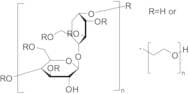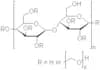
CAS 9004-62-0
:Cellulose, 2-hydroxyethyl ether
Description:
Cellulose, 2-hydroxyethyl ether, commonly known as hydroxyethyl cellulose (HEC), is a non-ionic, water-soluble polymer derived from cellulose. It is characterized by the substitution of hydroxyethyl groups onto the cellulose backbone, which enhances its solubility in water and modifies its rheological properties. HEC is typically used as a thickening agent, stabilizer, and film-forming agent in various applications, including pharmaceuticals, cosmetics, and food products. It is known for its ability to form gels and improve the texture and viscosity of formulations. HEC is also biocompatible and biodegradable, making it suitable for environmentally friendly applications. Its properties can be tailored by adjusting the degree of substitution and molecular weight, allowing for a wide range of functional uses. Additionally, HEC is stable under a variety of pH conditions and can withstand moderate temperatures, making it versatile in both aqueous and non-aqueous systems. Overall, hydroxyethyl cellulose is a valuable ingredient in many industrial and consumer products due to its multifunctional characteristics.
Formula:C2H6O2·xUnspecified
Synonyms:- 100000Yp2
- 2500Hec
- 250Hbr
- 250Hhbr
- 250Hr
- 250Lr
- 250Mbr
- 30000S
- 30000Yp2
- 3000M
- 3089Fs
- Aldiamed
- Cellosize
- Cf-G
- Cf-W
- HEC
- HEC-Unicel
- Hec-Cf-G
- Hydroxyaethylcellulose
- Hyetellose
- Liporamnosan
- Natrasol
- Natrosol
- OETs
- PF-VMTs
- Sanhec
- Sulfatsell
- Telhec
- Natrosol 250HR
- Cellulose, 2-hydroxyethyl ether
- Natrosol 250 M
- hydroxyl ethyl cellulose
- Cellulose hydroxyethylate
- Hydroxyethyl Cellulose
- Hydroxyethyl cellulose ether
- Cellosize WP 4400
- Natrosol 250 H
- Hydroxy Ethyl Cellulose
- Hydroxyethyl ether cellulose
- Natrosol LR
- Natrosol 240JR
- Natrosol L 250
- Natrosol 250 HHR
- ah15
- cellosizeqp3
- aw15[polysaccharide]
- CELLULOSE, HYDROXYETHYL ETHER
- cellosizeqp30000
- 2-hydroxyethylcelluloseether
- 2-HYDROXYETHYL CELLULOSE
- CELLOSIZE WP-40
- HYDROXYETHYL-CELLULOSE DYED WITH OSTAZIN BRILLIANT RED H-3B
- cellosizeqp
- cellosize4400h16
- HYDROXYETHYL-CELLULOSE 140'000-160'000
- cellosizeqp1500
- bl15
- See more synonyms
Sort by
Purity (%)
0
100
|
0
|
50
|
90
|
95
|
100
2-Hydroxyethyl Cellulose
CAS:Controlled ProductApplications 2-Hydroxyethyl Cellulose is used in preparation of waterborne coating compound.Also, used in preparation method of high-temperature resistant stealth material.
References Zhang, J., et al.: Faming Zhuanli Shenqing, (2020); You, S., et al.: Faming Zhuanli Shenqing, (2020);Formula:C6H4ClNO3S2Color and Shape:NeatMolecular weight:0.00Hydroxyethyl cellulose - Viscocity 4500-6500mPa·s
CAS:Water thickener; rheological control additive; has industrial appplicationsPurity:Min. 95%Hydroxyethyl cellulose, Mw about 250'000
CAS:Hydroxyethyl cellulose (HEC) is a polysaccharide that is used as a thickener and emulsifier in the pharmaceutical industry. It has been shown to be effective in treating human serum with detrusor muscle contractions. HEC is also used as a negative control for experiments involving the effect of drugs on HIV infection. When mixed with isoxsuprine hydrochloride, HEC can be used to measure the concentration of basic proteins in human serum. The fluorescence probe can bind to specific regions of the protein, which will cause an increase in fluorescence when exposed to a wavelength of light. The optimum concentration of HEC for binding fluorescence probes was found using Langmuir adsorption isotherm measurements and fluorescence detector experiments. HEC has been shown to be an effective antimicrobial agent against bacteria and fungi, such as Staphylococcus aureus and Candida albicans. The benzalkonium chloride in HEC mayHydroxyethylcellulose for Identification RS
CAS:Color and Shape:White To Yellowish White Solid Powder Or Grains