CAS 9005-82-7
:Amylose
- AS 30 (carbohydrate)
- Amilosa
- Amylose EX 1
- Ao 512
- As 10
- As 110
- As 30
- As 320
- As 5
- As 70
- Bar 5K1
- Ex-I
- Kleptose Linecaps 17
- Polyamylose
- San Super 240L
- Sigma AO 512
- Unii-7Tdq74Y18L
- V Amylose
- α-Amylose
- See more synonyms
Amylose
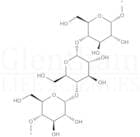
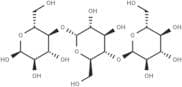
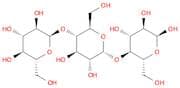
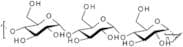
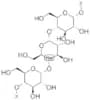
CAS:Amylose (straight chain starch) is a polysaccharide, a natural product and a biochemical reagent, composed of α-D-glucose units.Formula:C18H32O16Color and Shape:SolidMolecular weight:504.438Ref: IN-DA00GT82
Discontinued productAmylose
CAS:Starch consists of two polysaccharides, amylose and amylopectin and represents approximately 20-25% of the total polysaccharide content in starch. Amylose molecules consist of single mostly unbranched chains of 500-20,000 α-(1->4)-D-glucose residues dependent on source (e.g. wheat, rice, potato, tapioca, etc). Amylose can form an extended shape (hydrodynamic radius 7-22 nm) but generally tends to wind up into a rather stiff left-handed single helix or form even stiffer parallel left-handed double helical junction zones. Hydrogen bonding between aligned chains causes retrogradation and releases some of the bound water (syneresis). The aligned chains may then form double stranded crystallites that are resistant to amylases. These possess extensive inter- and intra-strand hydrogen bonding, resulting in a fairly hydrophobic structure of low solubility. The amylose content of starches is thus the major cause of resistant starch formation.
Formula:(C6H10O5)nColor and Shape:White Off-White Powder