CAS 9007-43-6
:Cytochrome c
- Citocromo C
- Cromoci
- Cytochrom c
- Cytochrome (bovine heart)
- Cytochrome C (horse heart)
- Cytochrome CymA
- Cytochrome c from horse heart
- Cytochrome c, Equine Heart
- Cytochrome�c equine heart
- Cytochrome�c from pigeon breast muscle
- Cytomac P
- Cytorest
- Ferricytochrome c
- Ferrocytochrome c
- Landrax
- Microperoxidase
- cytochrome C from bison heart
- cytochrome C from bovine heart
- cytochrome C from chicken heart
- cytochrome C from dog heart
- cytochrome C from pigeon breast muscle
- cytochrome C from porcine heart
- cytochrome C from rabbit heart
- cytochrome C from rat heart
- cytochrome C from saccharomyces*cerevisiae
- cytochrome C from sheep heart
- cytochrome C from tuna heart
- cytochrome C peptide map control
- cytochrome C practical grade: from*bovine heart
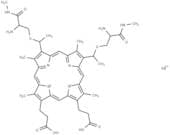
- iron(2+) (1Z,6Z,12Z,17Z)-4,9-bis(1-{[2-amino-3-(methylamino)-3-oxopropyl]sulfanyl}ethyl)-15,19-bis(2-carboxyethyl)-5,10,14,20-tetramethyl-21,22,23,24-tetraazapentacyclo[16.2.1.1~3,6~.1~8,11~.1~13,16~]tetracosa-1,3(24),4,6,8,10,12,14,16(22),17,19-undecaene-21,23-diide (non-preferred name)
- CYTOCHROME-C
- See more synonyms
Cytochrome C, from equine heart
CAS:Purity:≥ 90.0%Color and Shape:Red to dark red or brown powderMolecular weight:-Cytochrome C
CAS:Cytochrome C, class 1 c-type protein, has varied functions based on location and conditions.Formula:C42H52FeN8O6S2Purity:95%Color and Shape:Brown-Red Crystalline PowderMolecular weight:884.9Cytochrome C
CAS:Cytochrome C is a heme protein, which is predominantly found in the mitochondria of eukaryotic cells. Its source is the electron transport chain, where it functions as an essential component in the process of oxidative phosphorylation. Cytochrome C facilitates the transfer of electrons between Complex III and Complex IV, a crucial step in cellular respiration.In addition to its role in energy production, Cytochrome C is involved in the intrinsic pathway of apoptosis. Upon release into the cytosol, it binds to Apaf-1, leading to the formation of the apoptosome and subsequent activation of caspases that drive the apoptotic cascade. This dual functionality makes Cytochrome C a critical molecule in both energy metabolism and programmed cell death.Researchers utilize Cytochrome C in various applications, including the study of electron transport mechanisms, assays to measure apoptosis, and investigations into mitochondrial disorders. Its role as an apoptotic marker also aids in cancer research, providing insights into cell death regulation.Molecular weight is approx 12,000Da.
Formula:C42H54FeN8O6S2Purity:(%) Min. 95%Color and Shape:Red PowderMolecular weight:12,000 g/molCytochrome C (Oxidized) (Type 1) ex. Horse Heart extrapure, 90%
CAS:Purity:~ 90%Color and Shape:Brown to Very Dark Brown and Red to Very Dark Red, crystalline powderCytochrome C (Oxidized) (Type 2) ex. Horse Heart, 95%
CAS:Purity:min. 95% of reduced Cyto.CColor and Shape:Red to brownish red, Crystalline powderCytochrome C
CAS:Formula:C42H52FeN8O6S2Purity:99%Color and Shape:SolidMolecular weight:884.8872800000004