CAS 90097-45-3
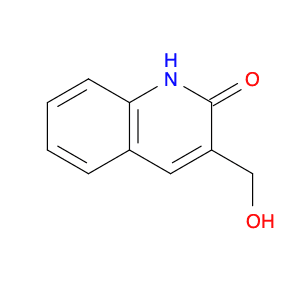
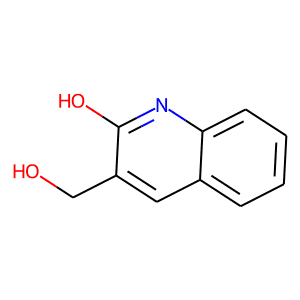
:3-(hydroxymethyl)quinolin-2(1H)-one
Description:
3-(Hydroxymethyl)quinolin-2(1H)-one, with the CAS number 90097-45-3, is a chemical compound that belongs to the quinoline family, characterized by a fused bicyclic structure containing a benzene ring and a pyridine ring. This compound features a hydroxymethyl group (-CH2OH) at the 3-position and a keto group (=O) at the 2-position of the quinoline ring. It is typically a solid at room temperature and may exhibit solubility in polar solvents due to the presence of the hydroxymethyl group, which can engage in hydrogen bonding. The compound may possess biological activity, making it of interest in medicinal chemistry and pharmacology. Its structural features suggest potential applications in drug development, particularly in targeting various biological pathways. Additionally, the presence of the hydroxymethyl and keto functionalities may influence its reactivity and interactions with other chemical species. As with many organic compounds, safety data should be consulted for handling and usage, as well as any relevant regulatory information.
Formula:C10H9NO2
InChI:InChI=1/C10H9NO2/c12-6-8-5-7-3-1-2-4-9(7)11-10(8)13/h1-5,12H,6H2,(H,11,13)
SMILES:c1ccc2c(c1)cc(CO)c(n2)O
Sort by
Purity (%)
0
100
|
0
|
50
|
90
|
95
|
100
Found 4 products.
3-(hydroxymethyl)-1,2-dihydroquinolin-2-one
CAS:Formula:C10H9NO2Purity:95%Color and Shape:SolidMolecular weight:175.18403-(Hydroxymethyl)quinolin-2(1H)-one
CAS:3-(Hydroxymethyl)quinolin-2(1H)-onePurity:95%Color and Shape:PowderMolecular weight:175.18g/mol3-(Hydroxymethyl)-2(1H)-quinolinone
CAS:3-(Hydroxymethyl)-2(1H)-quinolinone is a potent GABA antagonist with a low micromolar range of activity. It is used as a tool to evaluate the profile of GABA receptors and their kinetics, as well as to study the antagonistic activity at these receptors. 3-(Hydroxymethyl)-2(1H)-quinolinone has been shown to have antagonistic properties against glutamate and glycine receptors, although it does not bind to benzodiazepine or barbiturate binding sites. This drug has proapoptotic properties, which relates to its ability to induce neuronal cell death by apoptosis. 3-(Hydroxymethyl)-2(1H)-quinolinone also photolyzes in the presence of light and can be used for photodynamic therapy, which is an effective treatment for brain cancer.Formula:C10H9NO2Purity:Min. 95%Molecular weight:175.19 g/mol