CAS 9014-63-5
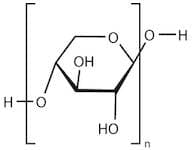
:Xylan
- <span class="text-smallcaps">D</span>-Xylan
- Cmt 85
- D-Xylan
- Dp 42
- Gums, wood
- Xilano
- Xylane
- Xylans
- xylan from oat spelts
- Polyxylan
- xylan from beechwood
- xylan from birch wood
- Xylan oat spelts
- 1,4-beta-D-Xylan
- (1,4-beta-D-Xylan)n+1
- (1,4-beta-D-Xylan)n
- Xylan
- See more synonyms
Ref: IN-DA0035ST
5kgTo inquire10kgTo inquire5g25.00€10g33.00€25g46.00€100g102.00€500g256.00€1kg619.00€Xylan
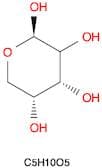
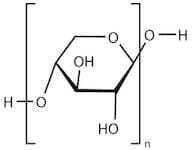
CAS:Xylan represents the main hemicellulose component in the secondary plant cell walls of flowering plants.Formula:C5H10O5Purity:85%Color and Shape:SolidMolecular weight:150.13Xylan
CAS:Applications Xylan is a major constituent of the secondary cell wall and plant cell-wall polysaccharides. Xylan is also used in the studies involving structural properties, foaming as a new means for food structuring in plants. Xylanases an enzymatic form of xylan is used in several biotechnological processes, primarily for biopulping and biobleaching in the paper industry and as accessory enzymes for bioethanol production.
References Yuan, Y., et al.: Plant and Cell Physiol., 57, 35 (2016); Kuang, B., et al.: Mol. Plant, 9, 1119 92016); Generoso, W. C., et al.: BioEnergy Res., 9, 931 (2016); Beatrice, C. A. G., et al.: Carbohydr. Polym., 173, 508 (2017)Formula:C5H10O6Color and Shape:White To Off-WhiteMolecular weight:166.13Xylan from beechwood
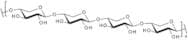
CAS:Xylan is the most abundant noncellulosic polysaccharide present in both hardwoods and annual plants. Xylan is found mainly in the secondary cell wall as part of the hemicellulose complex and forms an interface between lignin and other polysaccharides. In their simplest forms, xylans are linear polysaccharides of β-1,4-xylose residues but can also form complex heterogenous and polydispersed glycans.
Purity:(Pcr) Min. 98.0000000%Xylan - from beechwood
CAS:Xylan is the most abundant noncellulosic polysaccharide present in both hardwoods and annual plants. Xylan is found mainly in the secondary cell wall as part of the hemicellulose fraction and is considered to form an interface between lignin and other polysaccharides. In their simplest forms, xylans are linear homopolymers of β-1,4-xylose residues but can also form complex heterogenous and polydispersed glycans.
Color and Shape:Brown Slightly Brown PowderXylan - from corncob, MW 300-900
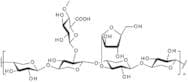
CAS:In their simplest forms, xylans are linear homopolymers of β-1,4-xylose residues. In nature they are partially substituted by acetyl, 4-O-methyl-D-glucuronosyl and α-1,3 L-arabinofuranosyl residues, forming complex heterogenous and polydispersed glycans. An example of this is in the L-arabino (methyl-D-glucurono) xylan from corn cob.Purity:Min. 95 Area-%Color and Shape:White Yellow PowderXylan from Beechwood
CAS:Color and Shape:Pale beige to Brown, Powder, Clear to slightly opalescent, Brown