CAS 90410-24-5
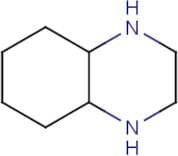
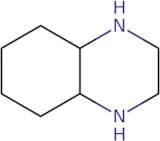
:decahydroquinoxaline
Description:
Decahydroquinoxaline is a bicyclic organic compound characterized by its saturated structure, which consists of a quinoxaline framework that has undergone full hydrogenation. This results in a colorless to pale yellow liquid at room temperature, with a relatively low boiling point compared to many other organic compounds. It is known for its unique properties, including moderate solubility in organic solvents and limited solubility in water. Decahydroquinoxaline is primarily used in organic synthesis and as an intermediate in the production of various chemical compounds. Its structure allows for potential applications in pharmaceuticals and agrochemicals, where it may serve as a building block for more complex molecules. The compound is generally stable under standard conditions but should be handled with care due to its potential reactivity and the need for proper safety measures during synthesis and application. As with many organic compounds, it is important to consider its environmental impact and toxicity when used in industrial or laboratory settings.
Formula:C8H16N2
InChI:InChI=1/C8H16N2/c1-2-4-8-7(3-1)9-5-6-10-8/h7-10H,1-6H2
SMILES:C1CCC2C(C1)NCCN2
Synonyms:- Quinoxaline, Decahydro-
- Decahydroquinoxaline
Sort by
Purity (%)
0
100
|
0
|
50
|
90
|
95
|
100
Found 4 products.
Decahydroquinoxaline
CAS:<p>Decahydroquinoxaline is a heterocyclic compound that contains a nitrogen atom in its structure. The hydroxyl group on the ring can act as an electron-donating group, which can be important for receptor binding and neurotransmission. It also has anti-inflammatory properties. Decahydroquinoxaline has been shown to have anticancer and anti-inflammatory effects, as well as being used for the treatment of chronic arthritis, bowel disease, and dopamine production.</p>Formula:C8H16N2Purity:Min. 95%Molecular weight:140.23 g/mol