CAS 9057-02-7
:Pullulan
Description:
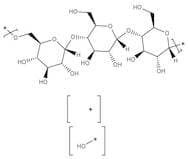
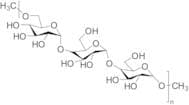
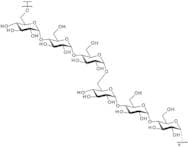
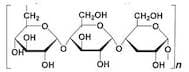
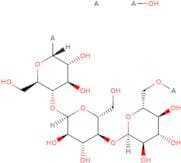
Pullulan is a polysaccharide polymer composed of maltotriose units linked by α-1,6-glycosidic bonds. It is produced by the fermentation of starch by the fungus Aureobasidium pullulans. Pullulan is characterized by its water-solubility, film-forming ability, and biodegradability, making it a versatile substance in various applications. It appears as a white to yellowish powder and is known for its low viscosity in solution, which allows for easy processing. Pullulan exhibits excellent film-forming properties, leading to its use in food packaging, pharmaceuticals, and cosmetics, where it can serve as a coating or encapsulating agent. Additionally, it has been studied for its potential health benefits, including its role as a prebiotic and its ability to form edible films that can enhance food preservation. Its non-toxic nature and compatibility with other substances further contribute to its appeal in both industrial and consumer products. Overall, pullulan is valued for its functional properties and sustainability in various applications.
Formula:Unspecified
Synonyms:- Inagel V 140
- NPcaps
- P 10
- P 10 (carbohydrate)
- P 100
- P 100 (carbohydrate)
- P 20
- P 20 (carbohydrate)
- P 200
- P 200 (carbohydrate)
- P 400
- P 400 (carbohydrate)
- P 50
- P 50 (carbohydrate)
- P 800
- P 800 (carbohydrate)
- PF 10 (carbohydrate)
- PF 20 (carbohydrate)
- PF 30 (carbohydrate)
- PF 7 (carbohydrate)
- Pf 10
- Pf 20
- Pf 30
- Pf 7
- Pi 10
- Pi 20
- Plantcaps
- Plantcaps 2
- Pluran T 1600
- Pu 101
- Pullulan PF 10
- Pullulan PF 20
- Pullulane
- Pululano
- Px 1
- Pullulan standard 1600000
- Pullulan standard 5800
- Pullulan standard 186000
- Pullulan standard 24000
- Pullulan
- Pullulan standard 12000
- Pullulan
- Pullulan standard 48000
- Pululan
- Pullulan standard 100000
- See more synonyms
Sort by
Purity (%)
0
100
|
0
|
50
|
90
|
95
|
100
Found 13 products.
Pullulan
CAS:This Thermo Scientific Chemicals brand product was originally part of the Alfa Aesar product portfolio. Some documentation and label information may refer to the legacy brand. The original Alfa Aesar product / item code or SKU reference has not changed as a part of the brand transition to Thermo SciFormula:(C18H30O15)AHOColor and Shape:White to off white crystalline powderMolecular weight:NaNPullulan for Molar Mass Determination (100 kDa)
CAS:Natural polymers & modified natural polymers, in primary forms, nesoiFormula:H(C36H60O30)nOHColor and Shape:White PowderPullulan for Molar Mass Determination (800 kda)
CAS:Natural polymers & modified natural polymers, in primary forms, nesoiFormula:H(C36H60O30)nOHColor and Shape:White PowderPullulan for Molar Mass Determination (400 kDa)
CAS:Natural polymers & modified natural polymers, in primary forms, nesoiFormula:H(C36H60O30)nOHColor and Shape:White PowderPullulan
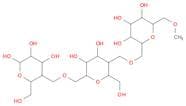
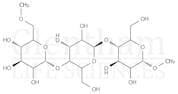
CAS:Pullulan is a glucan elaborated by the fungus Aureobasidium pullulans. The chemical structure is essentially repeating units of maltotriose joined by α-1,6 linkages. Pullulan dissolves readily in water to form stable, viscous solutions that do not gel. The polysaccharide can be moulded, made into fibres and forms clear soluble films. Applications are in foods as a low calorie ingredient and the polysaccharide forms water soluble films that have been used as seed coatings and to coat fruit. Pullulan can also be used in industrial applications as a binder, film former and in pharmaceutical applications. Average MW is typically 100-200kDa. Viscosity is ca 120 mm2/s. The image was kindly provided by Dr. Chris Lawson.Color and Shape:White PowderPullulan
CAS:Pullulan is a polysaccharide that is made up of D-glucose units linked in a beta-1,6 configuration. Pullulan has been used as a model system to study the molecular mechanisms of intramolecular hydrogen transfer reactions. The process optimization of pullulan production was studied using skin cells and structural analysis. This polymer is also used in food hydrocolloids, where it can be used to control the phase transition temperature. Pullulan has also been shown to have anti-angiogenic effects on liver cells and water vapor absorption properties.
Formula:(C6H12O5)n