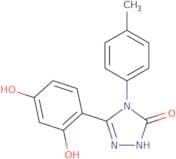
CAS 906669-07-6
:3H-1,2,4-Triazol-3-one,5-(2,4-dihydroxyphenyl)-2,4-dihydro-4-(4-methylphenyl)-
Description:
3H-1,2,4-Triazol-3-one, 5-(2,4-dihydroxyphenyl)-2,4-dihydro-4-(4-methylphenyl)-, identified by CAS number 906669-07-6, is a chemical compound characterized by its triazole ring structure, which is a five-membered heterocyclic compound containing three nitrogen atoms. This compound features multiple functional groups, including hydroxyl groups and an aromatic methylphenyl substituent, which contribute to its potential biological activity and solubility properties. The presence of hydroxyl groups suggests that it may engage in hydrogen bonding, influencing its reactivity and interactions with other molecules. Additionally, the triazole moiety is often associated with various pharmacological activities, making this compound of interest in medicinal chemistry. Its structural complexity may also impart unique physical properties, such as melting point and solubility in different solvents. Overall, the characteristics of this compound make it a subject of interest for further research, particularly in the fields of pharmaceuticals and agrochemicals.
Formula:C15H13N3O3
Sort by
Purity (%)
0
100
|
0
|
50
|
90
|
95
|
100
Found 3 products.
KPLH1130
CAS:KPLH1130, a PDK inhibitor, boosts glucose tolerance and reduces inflammation in high-fat diet mice.Formula:C15H13N3O3Purity:99.07%Color and Shape:SolidMolecular weight:283.28Ref: TM-T11765
1mg79.00€1mL*10mM (DMSO)178.00€5mg205.00€10mg333.00€25mg560.00€50mg797.00€100mg1,071.00€500mg2,187.00€KPLH1130
CAS:KPLH1130 is an analog of a protein kinase inhibitor that has shown promising results as an anticancer agent. It induces apoptosis in cancer cells by inhibiting the activity of protein kinases, which are enzymes involved in cell signaling pathways that regulate cell growth and division. KPLH1130 specifically targets Chinese hamster ovary cells and has been tested on human cancer cell lines with positive results. This potent inhibitor is derived from medicinal chemistry research on urine-derived inhibitors and shows promise as a potential tumor suppressor for various types of cancers. Its ability to target specific kinases makes it a valuable tool for cancer research and treatment.
Formula:C15H13N3O3Purity:Min. 95%Molecular weight:283.28 g/mol