CAS 90676-25-8
:Propylcyclohexanol
Description:
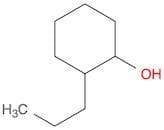
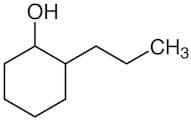
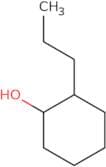
Propylcyclohexanol, with the CAS number 90676-25-8, is an organic compound characterized by a cyclohexane ring substituted with a propyl group and a hydroxyl group (–OH). This compound is classified as a secondary alcohol due to the presence of the hydroxyl group attached to a carbon that is bonded to two other carbon atoms. Propylcyclohexanol is typically a colorless to pale yellow liquid with a distinctive odor. It is moderately soluble in water and more soluble in organic solvents, reflecting its hydrophobic cyclohexane structure combined with the polar hydroxyl group. The compound exhibits typical alcohol properties, including the ability to participate in hydrogen bonding, which influences its boiling point and solubility. Propylcyclohexanol can be used in various applications, including as a solvent, in the synthesis of other chemical compounds, and potentially in fragrance formulations due to its pleasant scent. Safety data should be consulted for handling and exposure guidelines, as with any chemical substance.
Formula:C9H18O
InChI:InChI=1/C9H18O/c1-2-5-8-6-3-4-7-9(8)10/h8-10H,2-7H2,1H3
SMILES:CCCC1CCCCC1O
Synonyms:- 2-n-Propylcyclohexanol
- 2-Propylcyclohexanol
Sort by
Purity (%)
0
100
|
0
|
50
|
90
|
95
|
100
Found 4 products.
2-Propylcyclohexanol (cis- and trans- mixture)
CAS:Formula:C9H18OPurity:>90.0%(GC)Color and Shape:Colorless to Almost colorless clear liquidMolecular weight:142.242-Propylcyclohexanol (cis- and trans- mixture)
CAS:2-Propylcyclohexanol is a cyclic alcohol that is used as a solvent in organic chemistry. It has two different forms: cis-2-proptyclohexanol and trans-2-proptyclohexanol, which is a mixture of the two. 2-Propylcyclohexanol can be used as a bifunctional reagent for bond cleavage reactions and dehydration reactions. This compound also has properties that make it useful as an organic solvent, such as its ability to dissolve hydronium ions and its relatively low boiling point. 2-Propylcyclohexanol can be used in microscopy because it does not interfere with fluorescence detection or other light sources. It can also be used in the preparation of carbohydrates. The monomers from which this compound is made are cyclic, meaning that they are shaped like circles or rings. These monomers are made up of carbon atoms, hydrogen atoms, and oxygen atoms.Formula:C9H18OPurity:Min. 95%Molecular weight:142.24 g/mol