CAS 90780-51-1
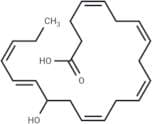
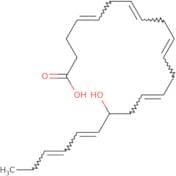
:4,7,10,13,17,19-Docosahexaenoicacid, 16-hydroxy-, (4Z,7Z,10Z,13Z,17E,19Z)-
Description:
4,7,10,13,17,19-Docosahexaenoic acid, 16-hydroxy-, (4Z,7Z,10Z,13Z,17E,19Z)-, commonly referred to as a hydroxy fatty acid, is a polyunsaturated fatty acid characterized by its long carbon chain and multiple double bonds. This compound features a hydroxyl group at the 16th carbon position, which influences its chemical reactivity and biological properties. The presence of multiple cis double bonds contributes to its fluidity and flexibility, making it an important component in biological membranes. It is known for its potential health benefits, particularly in cardiovascular health and anti-inflammatory effects. The specific stereochemistry indicated by the (4Z,7Z,10Z,13Z,17E,19Z) notation denotes the configuration of the double bonds, which is crucial for its biological activity. This fatty acid is typically found in marine oils and certain algae, and it plays a significant role in nutrition, particularly in the context of omega-3 fatty acids. Its CAS number, 90780-51-1, is a unique identifier used for regulatory and research purposes.
Formula:C22H32O3
Synonyms:- 4,7,10,13,17,19-Docosahexaenoicacid, 16-hydroxy-, (E,Z,Z,Z,Z,Z)-
Sort by
Purity (%)
0
100
|
0
|
50
|
90
|
95
|
100
Found 3 products.
(±)16-HDHA
CAS:(±)16-HDHA is an autoxidation product of docosahexaenoic acid (DHA) in vitro.Formula:C22H32O3Color and Shape:SolidMolecular weight:344.49516-hydroxy-4(Z),7(Z),10(Z),13(Z),17(E),19(Z)-docosahexaenoic acid
CAS:Formula:C22H32O3Purity:>98%Color and Shape:In solution, EthanolMolecular weight:344.4916-Hydroxy-4(Z),7(Z),10(Z),13(Z),17(E),19(Z)-docosahexaenoic acid
CAS:16-Hydroxy-4(Z),7(Z),10(Z),13(Z),17(E),19(Z)-docosahexaenoic acid is a specialized pro-resolving lipid mediator, which is derived from docosahexaenoic acid (DHA), a long-chain omega-3 fatty acid abundantly found in marine fish oils. This compound plays a pivotal role in modulating inflammatory responses and promoting the resolution phase of inflammation by interacting with specific cellular receptors and signaling pathways. Its mode of action involves the reduction of pro-inflammatory cytokine production and the enhancement of macrophage-mediated clearance of apoptotic cells and debris.
Formula:C22H32O3Purity:Min. 95%Molecular weight:344.5 g/mol