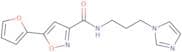
CAS 909089-13-0
:SKL 2001
Description:
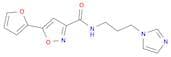
SKL 2001, with the CAS number 909089-13-0, is a chemical compound that has garnered attention in various fields, particularly in research and development. While specific characteristics can vary based on its formulation and application, SKL 2001 is generally recognized for its role as a surfactant or emulsifier. It typically exhibits properties such as good solubility in water and organic solvents, making it versatile for use in formulations. The compound may also demonstrate stability under a range of pH conditions and temperatures, which is advantageous for industrial applications. Additionally, SKL 2001 is often evaluated for its effectiveness in enhancing the dispersion of other substances, improving the stability of emulsions, and reducing surface tension. Safety data sheets and regulatory information should be consulted for detailed handling and safety guidelines, as with any chemical substance. Overall, SKL 2001 is a valuable compound in various applications, including cosmetics, pharmaceuticals, and industrial processes.
Formula:C14H14N4O3
Synonyms:- 2001
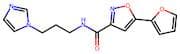
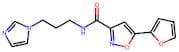
- N-(3-(1H-imidazol-1-yl)propyl)-5-(furan-2-yl)isoxazole-3-carboxamide
- SKL2001 free base
- CS-2771
- SKL2001;SKL-2001;SKL 2001
- SKL 2001
- 5-(furan-2-yl)-N-[3-(1H-imidazol-1-yl)propyl]-1,2-oxazole-3-carboxamide
- SKL-2001;SKL 2001
Sort by
Purity (%)
0
100
|
0
|
50
|
90
|
95
|
100
Found 5 products.
SKL2001
CAS:SKL2001, an agonist of the Wnt/β-catenin pathway, can disrupt the Axin/β-catenin interaction.Formula:C14H14N4O3Purity:97.46% - 99.99%Color and Shape:SolidMolecular weight:286.29Ref: TM-T6989
5mg38.00€10mg57.00€25mg102.00€50mg175.00€100mg321.00€200mg484.00€500mg755.00€1mL*10mM (DMSO)63.00€SKL 2001
CAS:SKL 2001 is a pluripotent cell line that has been activated by growth factors. The cells also have the ability to induce autophagy, which is the process of self-degradation and recycling. SKL 2001 cells are natural compounds derived from human embryonic stem cells. They are characterized by high levels of polymerase chain reaction (PCR) amplification products for genes encoding proteins such as β-catenin and c-Myc, which are involved in cancer formation and progression. SKL 2001 cells were shown to be effective in treating glioma patients in a preclinical study, reducing tumor size and inducing apoptosis of cancer tissues.
Formula:C14H14N4O3Purity:Min. 95%Molecular weight:286.29 g/mol