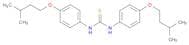
CAS 910-86-1
:Isoxyl
Description:
Isoxyl, with the CAS number 910-86-1, is a chemical compound known for its use as an antimicrobial agent, particularly in the treatment of bacterial infections. It is classified as a synthetic antibiotic and is part of the oxazolidinone class of compounds. Isoxyl exhibits a broad spectrum of activity against various Gram-positive bacteria, including strains resistant to other antibiotics. The compound is typically administered in veterinary medicine, particularly for livestock, to manage infections and promote growth. Its mechanism of action involves inhibiting protein synthesis in bacteria, which ultimately leads to cell death. Isoxyl is generally characterized by its stability under normal storage conditions, but like many antibiotics, it should be used judiciously to prevent the development of resistance. Safety data indicates that it should be handled with care, as with all pharmaceuticals, and proper guidelines should be followed to minimize any potential risks to human health and the environment.
Formula:C23H32N2O2S
InChI:InChI=1S/C23H32N2O2S/c1-17(2)13-15-26-21-9-5-19(6-10-21)24-23(28)25-20-7-11-22(12-8-20)27-16-14-18(3)4/h5-12,17-18H,13-16H2,1-4H3,(H2,24,25,28)
InChI key:InChIKey=BWBONKHPVHMQHE-UHFFFAOYSA-N
SMILES:N(C(NC1=CC=C(OCCC(C)C)C=C1)=S)C2=CC=C(OCCC(C)C)C=C2
Synonyms:- 1,3-bis[4-(3-methylbutoxy)phenyl]thiourea
- Thiourea, N,N′-bis[4-(3-methylbutoxy)phenyl]-
- N,N′-Bis[4-(3-methylbutoxy)phenyl]thiourea
- Thiocarlide
- 1,3-bis(4-isopentyloxyphenyl)thiourea
- Carbanilide, 4,4′-bis(isopentyloxy)thio-
- 4,4′-Bis(isoamyloxy)thiocarbanilide
- 4,4′-Bis(isopentyloxy)thiocarbanilide
Sort by
Purity (%)
0
100
|
0
|
50
|
90
|
95
|
100
Found 4 products.
Thiocarlide
CAS:Thiocarlide (isoxyl), a 1960s TB drug, combats resistant M. tuberculosis at 1-10 µg/ml, similar to INH/ETH but also inhibits fatty acid synthesis.Formula:C23H32N2O2SColor and Shape:SolidMolecular weight:400.58Isoxyl
CAS:Isoxyl is an antimicrobial agent that is used for the treatment of infections caused by bacteria and fungi. Isoxyl has a low toxicity profile in animals, but it may induce autoimmune reactions in animal models. It binds to bacterial or fungal ribosomes and inhibits protein synthesis by preventing the formation of peptide bonds. Isoxyl has been shown to be effective against infectious diseases such as tuberculosis, leprosy, and malaria. Isoxyl is a structural analog of ethionamide, which is an antituberculosis drug. The structural difference between these two drugs is that one of the iodine atoms in ethionamide has been replaced with nitrogen atoms. The presence of these nitrogen atoms makes ioxyl more stable than ethionamide, but less active against Mycobacterium tuberculosis.Formula:C23H32N2O2SPurity:Min. 95%Molecular weight:400.58 g/mol