CAS 91270-68-7
:6-bromonaphthalen-1-ol
Description:
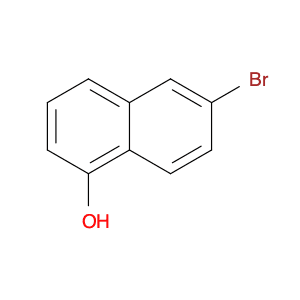
6-Bromonaphthalen-1-ol is an organic compound characterized by the presence of a bromine atom and a hydroxyl group attached to a naphthalene ring system. This compound features a naphthalene backbone, which consists of two fused benzene rings, with the hydroxyl (-OH) group located at the 1-position and the bromine atom at the 6-position. It typically appears as a solid at room temperature and is soluble in organic solvents, while exhibiting limited solubility in water due to its hydrophobic naphthalene structure. The presence of the bromine atom introduces unique reactivity, making it useful in various chemical reactions, including nucleophilic substitutions and coupling reactions. Additionally, the hydroxyl group contributes to its potential as a phenolic compound, which can participate in hydrogen bonding and influence its physical properties. 6-Bromonaphthalen-1-ol may find applications in organic synthesis, materials science, and as an intermediate in the production of pharmaceuticals or agrochemicals. Safety precautions should be observed when handling this compound due to its potential toxicity and environmental impact.
Formula:C10H7BrO
InChI:InChI=1/C10H7BrO/c11-8-4-5-9-7(6-8)2-1-3-10(9)12/h1-6,12H
SMILES:c1cc2cc(ccc2c(c1)O)Br
Synonyms:- 1-Naphthalenol, 6-Bromo-
- 6-Bromo-1-naphthol
- 6-broMonaphthalen-1-ol
- 6-BROMO-1-HYDROXYNAPHTHALENE, 6-Bromonaphthalen-1-ol
- 6-Bromo-1-hydroxyphthalene
- 6-Bromo-1-hydroxynaphthalene
Sort by
Purity (%)
0
100
|
0
|
50
|
90
|
95
|
100
Found 4 products.
6-Bromo-1-hydroxynaphthalene
CAS:Formula:C10H7BrOPurity:97%Color and Shape:SolidMolecular weight:223.06606-Bromo-1-hydroxynaphthalene
CAS:Formula:C10H7BrOPurity:97%Color and Shape:SolidMolecular weight:223.0696-Bromonaphthalen-1-ol
CAS:6-Bromonaphthalen-1-ol is a compound that has shown antimicrobial and antifungal activity. It is the most potent of the naphthoxazines tested to date, with an MIC of 0.04 µg/ml against Escherichia coli. 6-Bromonaphthalen-1-ol was synthesized by reacting 1,2,4-trihydroxybenzene with bromine gas in the presence of mercuric chloride catalyst. The compound was hydrolyzed for elemental analysis and found to be C7H4BrO. Elemental analysis yielded a weight percentage of 71% carbon, 13% hydrogen, 3% bromine, and 12% oxygen. The x-ray diffraction pattern showed peaks at 2θ values of 22.3° (100), 26.5° (101), 33.7° (102), 40° (104), 44° (105) and 62°Formula:C10H7BrOPurity:Min. 95%Molecular weight:223.07 g/mol