CAS 91301-03-0
:2-oxo-1,2-dihydroquinoline-3-carbaldehyde
Description:
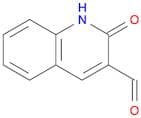
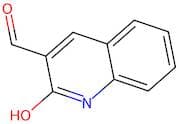
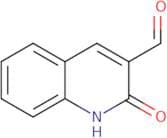
2-Oxo-1,2-dihydroquinoline-3-carbaldehyde, with the CAS number 91301-03-0, is a heterocyclic organic compound characterized by its quinoline structure, which features a fused benzene and pyridine ring. This compound typically exhibits a carbonyl group (C=O) at the 2-position and an aldehyde group (–CHO) at the 3-position, contributing to its reactivity and potential applications in organic synthesis. It is generally a yellow to brown solid, soluble in organic solvents, and may exhibit fluorescence. The presence of both the carbonyl and aldehyde functionalities allows for various chemical reactions, including condensation and nucleophilic addition, making it useful in the synthesis of more complex molecules. Additionally, compounds of this type may possess biological activity, which has led to interest in their potential pharmaceutical applications. As with many organic compounds, handling should be done with care, considering safety data and proper laboratory protocols.
Formula:C10H7NO2
InChI:InChI=1/C10H7NO2/c12-6-8-5-7-3-1-2-4-9(7)11-10(8)13/h1-6H,(H,11,13)
SMILES:c1ccc2c(c1)cc(C=O)c(n2)O
Synonyms:- 2-Hydroxyquinoline-3-Carbaldehyde
- 3-Quinolinecarboxaldehyde, 1,2-Dihydro-2-Oxo-
- 3-Quinolinecarboxaldehyde, 2-Hydroxy-
- 2-Oxo-1,2-dihydroquinoline-3-carbaldehyde
Sort by
Purity (%)
0
100
|
0
|
50
|
90
|
95
|
100
Found 5 products.
1,2-Dihydro-2-oxo-3-quinolinecarboxaldehyde
CAS:Formula:C10H7NO2Purity:98%Color and Shape:SolidMolecular weight:173.16811,2-Dihydro-2-oxoquinoline-3-carboxaldehyde
CAS:1,2-Dihydro-2-oxoquinoline-3-carboxaldehydeFormula:C10H7NO2Purity:98%Color and Shape:SolidMolecular weight:173.17g/mol2-Hydroxyquinoline-3-carbaldehyde
CAS:Controlled ProductFormula:C10H7NO2Color and Shape:NeatMolecular weight:173.1682-Hydroxyquinoline-3-carbaldehyde
CAS:2-Hydroxyquinoline-3-carbaldehyde is an apical, synchronous fluorescence compound that has antioxidative properties. It has been shown to have a protective effect against cervical cancer and skin cancer in animal studies. 2-Hydroxyquinoline-3-carbaldehyde also inhibits the growth of human liver cells and induces apoptosis in hepatocellular carcinoma cells (HepG2). It binds to albumin and chloride ions, which may account for its antitumor activity. Structural analysis has revealed that 2-hydroxyquinoline-3-carbaldehyde is structurally similar to 2-amino-5 -iodobenzoic acid, a molecule known to inhibit tumor growth. Binding experiments reveal that 2HCQC binds to cancer cells through electrostatic interactions with the cell membrane.Formula:C10H7NO2Purity:Min. 95%Molecular weight:173.17 g/mol