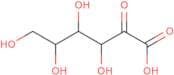
CAS 91548-32-2
:L-lyxo-Hexulosonic acid
Description:
L-lyxo-Hexulosonic acid, with the CAS number 91548-32-2, is a sugar acid that belongs to the class of hexulosonic acids, which are derived from hexoses. This compound is characterized by its unique structure, which includes a six-carbon backbone with a carboxylic acid functional group. L-lyxo-Hexulosonic acid is typically found in certain biological systems and may play a role in metabolic pathways. Its stereochemistry is significant, as it possesses specific configurations that can influence its biological activity and interactions with enzymes. The compound is soluble in water, which is common for many sugar acids, and it may participate in various biochemical reactions, including those involving glycosylation and energy metabolism. While specific applications may vary, compounds like L-lyxo-Hexulosonic acid are often studied for their potential roles in nutrition, biochemistry, and pharmaceuticals. Further research may reveal additional properties and applications in scientific and industrial contexts.
Formula:C6H10O7
InChI:InChI=1S/C6H10O7/c7-1-2(8)3(9)4(10)5(11)6(12)13/h2-4,7-10H,1H2,(H,12,13)/t2-,3+,4+/m0/s1
InChI key:InChIKey=VBUYCZFBVCCYFD-PZGQECOJSA-N
SMILES:[C@@H]([C@@H]([C@H](CO)O)O)(C(C(O)=O)=O)O
Synonyms:- 3,4,5,6-tetrahydroxy-2-oxo-hexanoic acid
- NSC 87544
- L-lyxo-Hexulosonic acid
Sort by
Purity (%)
0
100
|
0
|
50
|
90
|
95
|
100
Found 1 products.
2-Keto-L-galactonic acid
CAS:2-Keto-L-galactonic acid is a chemical compound that belongs to the group of fatty acids. It is produced by the degradation of polyunsaturated fatty acids and has been shown to be a potential control agent for hepatic steatosis. 2-Keto-L-galactonic acid also inhibits the synthesis of dinucleotide phosphate in rat liver cells, leading to an accumulation of intracellular potassium ion. This compound inhibits the uptake of glucose by activating ATPase, which leads to an increase in intracellular pH. The uptake of 2-keto-L-galactonic acid into cells has been shown using cell culture experiments with wild type and mutant strains.
Formula:C6H10O7Purity:Min. 95%Molecular weight:194.14 g/mol