CAS 918-00-3
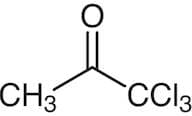
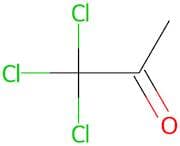
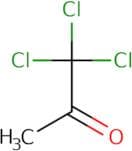
:1,1,1-Trichloropropanone
Description:
1,1,1-Trichloropropanone is an organic compound characterized by its three chlorine atoms attached to the first carbon of a propanone structure. It is a colorless to pale yellow liquid with a pungent odor, often associated with chlorinated solvents. This compound is known for its high density and low volatility, making it less likely to evaporate quickly. It is soluble in organic solvents but has limited solubility in water. 1,1,1-Trichloropropanone is primarily used in the synthesis of various chemical intermediates and can serve as a solvent in certain industrial applications. Due to the presence of chlorine atoms, it exhibits reactivity typical of halogenated compounds, including potential for hydrolysis and substitution reactions. Safety considerations are important, as it may pose health risks upon exposure, including respiratory irritation and potential environmental hazards. Proper handling and disposal methods are essential to mitigate risks associated with its use.
Formula:C3H3Cl3O
InChI:InChI=1S/C3H3Cl3O/c1-2(7)3(4,5)6/h1H3
InChI key:InChIKey=SMZHKGXSEAGRTI-UHFFFAOYSA-N
SMILES:C(C(C)=O)(Cl)(Cl)Cl
Synonyms:- 1,1,1-Trichloro-2-propanone
- 1,1,1-Trichloroacetone
- 1,1,1-Trichloropropan-2-One
- 1,1,1-Trichloropropanone
- 2-Propanone, 1,1,1-trichloro-
- NSC 2645
- Trichloromethyl methyl ketone
- α,α,α-Trichloroacetone
Sort by
Purity (%)
0
100
|
0
|
50
|
90
|
95
|
100
Found 4 products.
1,1,1-Trichloroacetone
CAS:Formula:C3H3Cl3OPurity:>95.0%(GC)Color and Shape:Colorless to Light yellow clear liquidMolecular weight:161.411,1,1-Trichloroacetone
CAS:1,1,1-TrichloroacetonePurity:95%Color and Shape:Clear LiquidMolecular weight:161.41g/molDisinfection By-products Mixture 912 5000 µg/mL in Acetone
CAS:Controlled ProductFormula:C3H3Cl3OColor and Shape:ColourlessMolecular weight:161.411,1,1-Trichloroacetone
CAS:1,1,1-Trichloroacetone (1,1,1-TCA) is a chemical compound that is used as an industrial solvent. It is produced by the reaction of sodium carbonate and 2,4-dichlorobenzoic acid in the presence of hydrochloric acid. 1,1,1-Trichloroacetone reacts with benzalkonium chloride to form trichloroacetic acid. The rate of this reaction increases with increasing pH values. The formation of 1,1,1-trichloroacetone can be monitored by measuring the concentration of malonic acid over time. This analytical method can also be used to detect the presence of urea nitrogen in a sample.Formula:C3H3Cl3OPurity:Min. 95%Molecular weight:161.41 g/mol