CAS 92-61-5
:Scopoletin
Description:
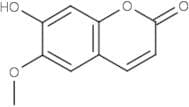
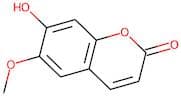
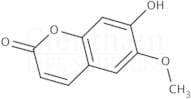
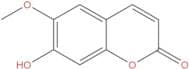
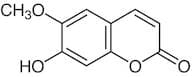
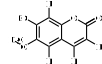
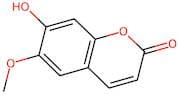
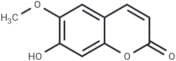
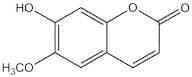
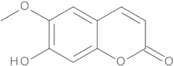
Scopoletin, with the CAS number 92-61-5, is a naturally occurring coumarin derivative known for its diverse biological activities. It is characterized by its chemical structure, which includes a benzopyranone core, contributing to its aromatic properties. Scopoletin is typically found in various plants, particularly in the families of Apiaceae and Asteraceae, and is recognized for its potential health benefits, including anti-inflammatory, antioxidant, and antimicrobial properties. The compound exhibits a pale yellow to white crystalline appearance and is soluble in organic solvents like ethanol and methanol, but less soluble in water. Scopoletin has been studied for its role in traditional medicine and its potential applications in pharmacology, particularly in the treatment of conditions such as diabetes and cancer. Its ability to modulate various biochemical pathways makes it a subject of interest in both natural product chemistry and medicinal research. Overall, scopoletin represents a significant compound with promising therapeutic potential and a rich profile of biological activities.
Formula:C10H8O4
InChI:InChI=1S/C10H8O4/c1-13-9-4-6-2-3-10(12)14-8(6)5-7(9)11/h2-5,11H,1H3
InChI key:InChIKey=RODXRVNMMDRFIK-UHFFFAOYSA-N
SMILES:O(C)C=1C=C2C(=CC1O)OC(=O)C=C2
Synonyms:- .beta.-Methylesculetin
- 2H-1-benzopyran-2-one, 7-hydroxy-6-methoxy-
- 6-Methoxy-7-hydroxycoumarin
- 6-Methylesculetin
- 6-O-Methylesculetin
- 7-Hidroxi-6-Metoxicumarina
- 7-Hydroxy-6-Methoxycoumarin
- 7-Hydroxy-6-Methoxycoumarine
- 7-Hydroxy-6-methoxy-2H-1-benzopyran-2-one
- 7-Hydroxy-6-methoxy-2H-chromen-2-on
- 7-Hydroxy-6-methoxycumarin
- 7-Hydroxy-6-méthoxy-2H-chromén-2-one
- Buxuletin
- Chrysatropic acid
- Coumarin, 7-hydroxy-6-methoxy-
- Escopoletin
- Esculetin 6-methyl ether
- Gelseminic acid
- Murrayetin
- Nsc 405647
- Scopoletine
- Scopoletol
- See more synonyms
Sort by
Purity (%)
0
100
|
0
|
50
|
90
|
95
|
100
Scopoletin
CAS:Scopoletin analytical standard provided with w/w absolute assay, to be used for quantitative titration.Formula:C10H8O4Purity:(HPLC) ≥99%Color and Shape:PowderMolecular weight:192.17Scopoletin
CAS:Lactones, nesoiFormula:C10H8O4Color and Shape:Light Yellow Colorless Powder CrystalsMolecular weight:192.042262H-1-Benzopyran-2-one, 7-hydroxy-6-methoxy-
CAS:Formula:C10H8O4Purity:98%Color and Shape:SolidMolecular weight:192.1681Scopoletin
CAS:Formula:C10H8O4Purity:(HPLC) ≥ 98.0%Color and Shape:Off-white to yellow powderMolecular weight:192.17Scopoletin
CAS:Scopoletin exhibits antifungal, anti-allergic, anti-aging, and hypouricemic activities, it exerts anti-RA action probably through suppressing IL-6 production from fibroblast-like synoviocytes via MAPK/PKC/CREB pathways. Scopoletin can ameliorate alcohol-induced hepatic lipid accumulation by modulating AMPK-SREBP pathway-mediated lipogenesis in mice fed a high-fat diet.Formula:C10H8O4Purity:95%~99%Molecular weight:192.17Scopoletin
CAS:Formula:C10H8O4Purity:>98.0%(T)(HPLC)Color and Shape:White to Orange to Green powder to crystalMolecular weight:192.17Scopoletin
CAS:ScopoletinFormula:C10H8O4Purity:By hplc: 99.36% (Typical Value in Batch COA)Color and Shape: light yellow powderMolecular weight:192.17g/molScopoletin
CAS:Scopoletin (Esculetin 6-methyl ether) is a plant growth factor derived from the root of Scopolia carniolica, inhibits of acetylcholinesterase (AChE).Formula:C10H8O4Purity:97.06% - 99.88%Color and Shape:Yellow To Beige Crystalline PowderMolecular weight:192.17Scopoletin
CAS:LactoneFormula:C10H8O4Purity:≥ 95.0 % (HPLC)Color and Shape:PowderMolecular weight:192.17Scopoletin
CAS:Applications Scopoletin is the aglucone of Scopolin. Used for cosmetics, topical formulations, and foods. Dyes and metabolites.
Formula:C10H8O4Color and Shape:White To Light BrownMolecular weight:192.17Scopoletin
CAS:Scopoletin is a naturally occurring coumarin derivative, which is primarily isolated from plants such as those in the Solanaceae and Asteraceae families. It exhibits a diverse range of biological activities due to its multifaceted mode of action, which includes antioxidant, anti-inflammatory, and antimicrobial properties. As a phytochemical, scopoletin can modulate various biochemical pathways, influencing both enzymatic and receptor-mediated processes.Formula:C10H8O4Purity:Min. 95%Color and Shape:Slightly Yellow PowderMolecular weight:192.17 g/molScopoletin extrapure, 98%
CAS:Formula:C10H8O4Purity:min. 99%Color and Shape:Pale yellow, Crystalline powderMolecular weight:192.17