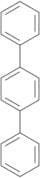
CAS 92-94-4
:p-Terphenyl
Description:
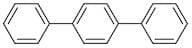
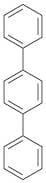
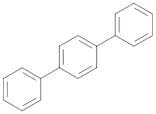
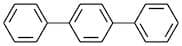
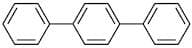
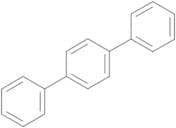
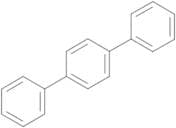
p-Terphenyl, with the CAS number 92-94-4, is an organic compound characterized by its structure, which consists of three connected phenyl rings (C6H5) arranged in a linear fashion. This aromatic hydrocarbon is a colorless crystalline solid at room temperature and is known for its high melting point and stability under various conditions. p-Terphenyl is insoluble in water but soluble in organic solvents such as benzene and toluene. It exhibits notable thermal stability and is often used as a heat transfer medium in high-temperature applications. Additionally, p-terphenyl has applications in the field of organic electronics, particularly in the development of phosphorescent materials and as a component in scintillation detectors due to its ability to emit light when excited. Its chemical properties include the ability to undergo electrophilic substitution reactions typical of aromatic compounds, making it a versatile compound in synthetic organic chemistry. Overall, p-terphenyl is significant in both industrial applications and research settings.
Formula:C18H14
InChI:InChI=1/C18H14/c1-3-7-15(8-4-1)17-11-13-18(14-12-17)16-9-5-2-6-10-16/h1-14H
InChI key:InChIKey=XJKSTNDFUHDPQJ-UHFFFAOYSA-N
SMILES:C1(=CC=C(C=C1)C2=CC=CC=C2)C3=CC=CC=C3
Synonyms:- 1,1'-Biphenyl, 4-phenyl-
- 1,1′:4′,1′′-Terphenyl
- 1,4-Diphenylbenzene
- 1,4-Diphenylbenzol
- 4-Phenyl-1,1'-biphenyl
- 4-Phenylbiphenyl
- Nsc 6810
- P-Terfenilo
- P-Terphenyl
- PT
- PTP
- Santowax P
- T 3203
- TP
- TP (scintillator)
- p-Diphenylbenzene
- p-Phenylene trimer
- p-Terphenyle
- p-Triphenyl
- 1,1':4',1''-Terphenyl
- [1,1'
- biphenyl,4-phenyl
- diphenyl-1,4benzene
- 4-phenyl-1’-biphenyl
- Biphenyl, 4-phenyl-
- benzene,1,4-diphenyl-
- 4',1'']-Terphenyl
- para-terphenyl
- TERPHENYL, P-
- 4-Phenyldiphenyl
- 4-phenyl-bipheny
- See more synonyms
Sort by
Purity (%)
0
100
|
0
|
50
|
90
|
95
|
100
Found 12 products.
p-Terphenyl
CAS:Formula:C18H14Purity:>99.0%(GC)Color and Shape:White to Almost white powder to crystalMolecular weight:230.31p-Terphenyl, 99+%
CAS:p-Terphenyl is a specialty material, and may be used in ionized radiation detectors, nonpolar laser dye, and single molecule optical probe of scanning near-field microscopy. This Thermo Scientific Chemicals brand product was originally part of the Alfa Aesar product portfolio. Some documentation anFormula:C18H14Purity:99+%Color and Shape:White, Crystals or powder or crystalline powderMolecular weight:230.31p-Terphenyl
CAS:p-Terphenyl is a triphenyl derivative used in industry as a heat transfer medium and dye carrier, and can be used for related research in the life sciences.Formula:C18H14Color and Shape:SolidMolecular weight:230.3p-Terphenyl
CAS:Formula:C18H14Purity:≥ 98.5%Color and Shape:White to off-white crystalline powderMolecular weight:230.31Ref: 54-OR46216
5g37.00€25g37.00€100g53.00€500g156.00€2.5kg615.00€10kg2,194.00€25kg5,027.00€50kg9,356.00€100kg17,322.00€950kg139,836.00€p-Terphenyl (purified by sublimation)
CAS:Formula:C18H14Purity:>99.5%(GC)Color and Shape:White powder to crystalMolecular weight:230.31p-Terphenyl
CAS:Controlled ProductApplications p-Terphenyl is used in analytical studies, it can be used as a neutron detector.
Not a dangerous good if item is equal to or less than 1g/ml and there is less than 100g/ml in the package
References Matei, C. et al.: Nucl. Instrum. Meth. A., 676, 135 (2012);Formula:C18H14Color and Shape:WhiteMolecular weight:230.31,4-Diphenylbenzene
CAS:1,4-Diphenylbenzene is an aromatic hydrocarbon that has a phenyl group and four benzene rings. It has been shown to have x-ray crystal structures with hydroxyl groups that can be deprotonated to form anion radicals. 1,4-Diphenylbenzene has also been shown to have antioxidant properties in prostate cancer cells by scavenging anion radicals and preventing the oxidation of DNA bases. It also inhibits the growth of rat liver microsomes due to its chemical stability and ability to form conjugates with benzalkonium chloride. The synthesis methods for 1,4-diphenylbenzene include the acetate extract method, which uses acetone as a solvent and sodium or potassium acetate as a catalyst. Another method includes the etoac extract method, which uses ethanol as a solvent and sodium or potassium acetate as a catalyst.Formula:C18H14Purity:Min. 95%Color and Shape:White Off-White PowderMolecular weight:230.3 g/mol