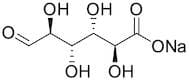
CAS 921-56-2
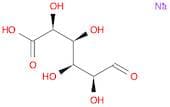
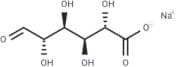
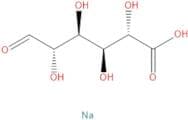
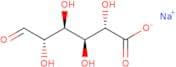
:Sodium D-mannuronate
Description:
Sodium D-mannuronate is the sodium salt of D-mannuronic acid, a naturally occurring uronic acid. It is characterized by its white to off-white crystalline appearance and is soluble in water, making it suitable for various applications in biochemistry and pharmaceuticals. This compound is known for its role in the biosynthesis of alginates, which are polysaccharides found in brown seaweed, and it can be utilized in food and cosmetic industries as a thickening agent or stabilizer. Sodium D-mannuronate exhibits biological activity, including potential anti-inflammatory and immunomodulatory effects, which have garnered interest in medical research. Its safety profile is generally favorable, but like any chemical substance, it should be handled with care, following appropriate safety guidelines. The compound's molecular structure includes a carboxyl group, contributing to its acidic properties, and it can participate in various chemical reactions typical of carboxylic acids. Overall, Sodium D-mannuronate is a versatile compound with significant applications in both industrial and research settings.
Formula:C6H10O7·Na
InChI:InChI=1S/C6H10O7.Na/c7-1-2(8)3(9)4(10)5(11)6(12)13;/h1-5,8-11H,(H,12,13);/t2-,3-,4+,5+;/m1./s1
InChI key:InChIKey=QKHMTHNLNZGTSP-MHFWOIHZSA-N
SMILES:[C@H]([C@@H]([C@@H](C=O)O)O)([C@@H](C(O)=O)O)O.[Na]
Synonyms:- Sodium D-mannuronate
- D-Mannuronic acid, monosodium salt
- D-Mannuronic acid, sodium salt (1:1)
Sort by
Purity (%)
0
100
|
0
|
50
|
90
|
95
|
100
Found 7 products.
D-Mannuronic acid, sodium salt (1:1)
CAS:Formula:C6H10NaO7Purity:98%Color and Shape:SolidMolecular weight:217.1292D-Mannuronic acid sodium
CAS:Sodium D-mannuronate, derived from the seaweed Macrocystis pyrifera, shows promise as a therapeutic agent in studies of autoimmune encephalomyelitis (EAE),Formula:C6H9NaO7Color and Shape:SolidMolecular weight:216.12D-Mannuronic acid sodium salt
CAS:D-Mannuronic acid (ManA) is a hexuronic acid having the CH2OH at C5 of mannose replaced by a carboxyl group (Collins, 2006). The major source of D-mannuronic acid is the polysaccharide, alginic acid, found in brown seaweeds (Phaeophyceae). The polysaccharide is a linear glycuronan consisting of (1+4)-linked residues of D-mannuronic acid and L-guluronic acid arranged in a block fashion in the polymer chain, with blocks containing one type of residue being separated by segments in which the two residues aIternate (Percival, 1967). In addition to algal sources, two genera of bacteria have been shown to secrete alginate-like polysaccharides, Pseudomonas and Azotobacter. Most of the research into bacterial alginate biosynthesis has been conducted on the opportunistic human pathogen Pseudomonas aeruginosa or the soil dwelling Azotobacter vinelandii. In both cases, bacterial alginate is partially acetylated (Hay, 2013).Formula:C6H10O7•NaPurity:Min. 98 Area-%Color and Shape:White PowderMolecular weight:217.13 g/molD-Mannuronic Acid Sodium Salt
CAS:Controlled ProductFormula:C6H9NaO7Color and Shape:NeatMolecular weight:216.121