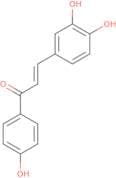
CAS 92496-89-4
:2-Propen-1-one,3-(3,4-dihydroxyphenyl)-1-(4-hydroxyphenyl)-
Description:
The chemical substance known as 2-Propen-1-one, 3-(3,4-dihydroxyphenyl)-1-(4-hydroxyphenyl)-, with the CAS number 92496-89-4, is an organic compound characterized by its structure, which includes a propenone moiety and multiple hydroxyl-substituted phenyl groups. This compound features a conjugated system that enhances its reactivity and potential biological activity. The presence of hydroxyl groups contributes to its polarity and solubility in polar solvents, while also allowing for hydrogen bonding interactions. The compound may exhibit antioxidant properties due to the presence of multiple phenolic hydroxyl groups, which can scavenge free radicals. Additionally, its structural features suggest potential applications in pharmaceuticals, particularly in the development of compounds with anti-inflammatory or anticancer properties. The compound's stability and reactivity can be influenced by environmental factors such as pH and temperature, making it important to consider these conditions in practical applications. Overall, this compound represents a class of polyphenolic compounds with diverse potential uses in medicinal chemistry and materials science.
Formula:C15H12O4
Synonyms:- Chalcone,3,4,4'-trihydroxy- (6CI,7CI)
- 3,4,4'-Trihydroxychalcone
Sort by
Purity (%)
0
100
|
0
|
50
|
90
|
95
|
100
Found 1 products.
4',3,4-Trihydroxychalcone
CAS:4',3,4-Trihydroxychalcone is a naturally-derived flavonoid, which is a type of polyphenolic compound. It is primarily sourced from plants, notably in the root and bark of certain species such as licorice. Flavonoids like 4',3,4-Trihydroxychalcone are known for their bioactive properties, which include antioxidative and anti-inflammatory effects. The mode of action involves the scavenging of free radicals and modulation of signaling pathways involved in inflammatory responses, which helps in reducing oxidative stress and inflammation.Formula:C15H12O4Purity:Min. 95%Color and Shape:PowderMolecular weight:256.25 g/mol