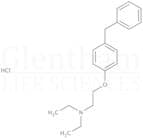
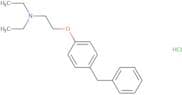
CAS 92981-78-7
:2-(4-Benzylphenoxy)-N,N-diethylethylamine hydrochloride
Description:
2-(4-Benzylphenoxy)-N,N-diethylethylamine hydrochloride, with the CAS number 92981-78-7, is a chemical compound characterized by its unique structure, which includes a benzyl group and a diethylamino moiety. This compound typically appears as a white to off-white crystalline solid and is soluble in polar solvents such as water and alcohols, which is indicative of its ionic nature due to the presence of the hydrochloride salt form. The presence of the benzylphenoxy group suggests potential applications in medicinal chemistry, particularly in the development of pharmaceuticals, as it may exhibit biological activity related to neurotransmitter modulation. Its amine functional groups can participate in hydrogen bonding, influencing its reactivity and interaction with biological systems. Safety data sheets should be consulted for handling and storage guidelines, as with any chemical substance, to ensure proper safety measures are taken due to potential toxicity or reactivity. Overall, this compound's structural features and solubility profile make it of interest in various chemical and pharmaceutical applications.
Formula:C19H26ClNO
InChI:InChI=1/C19H25NO.ClH/c1-3-20(4-2)14-15-21-19-12-10-18(11-13-19)16-17-8-6-5-7-9-17;/h5-13H,3-4,14-16H2,1-2H3;1H
SMILES:CCN(CC)CCOc1ccc(cc1)Cc1ccccc1.Cl
Synonyms:- Tesmilifene hydrochloride
- Bmy-33419
- Bms-217380
- N,N-Dppe
- 2-(4-benzylphenoxy)-N,N-diethylethanamine hydrochloride (1:1)
Sort by
Purity (%)
0
100
|
0
|
50
|
90
|
95
|
100
Found 2 products.
Dppe hydrochloride
CAS:Controlled ProductDppe hydrochloride is a biologically active compound that is synthesized by the asymmetric synthesis of 2-phenylpropane-1,2-diol. Dppe hydrochloride has been shown to inhibit the activity of the P-glycoprotein (Pgp) transporter, which is responsible for transporting many drugs and other compounds out of cells. It also inhibits cancer cell growth in vitro and in vivo and can be used as a chemotherapeutic agent against prostate cancer. Dppe hydrochloride may have an effect on physiological function in humans as it has been shown to reduce insulin resistance in diabetic mice.Formula:C19H26ClNOPurity:Min. 95%Molecular weight:319.9 g/mol