CAS 930-66-5
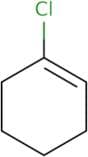
:1-chloro-cyclohexene
Description:
1-Chloro-cyclohexene is an organic compound characterized by a cyclohexene ring with a chlorine atom substituent. It is a colorless to pale yellow liquid at room temperature, exhibiting a distinctive odor typical of chlorinated hydrocarbons. The presence of the chlorine atom introduces polarity to the molecule, affecting its solubility and reactivity. 1-Chloro-cyclohexene is generally insoluble in water but soluble in organic solvents such as ethanol and ether. It is classified as a halogenated alkene, which makes it reactive, particularly in nucleophilic substitution reactions. The compound can undergo various chemical transformations, including elimination reactions and addition reactions, due to the presence of the double bond in the cyclohexene structure. Safety considerations are important when handling this substance, as it may pose health risks through inhalation or skin contact. Proper storage in a cool, well-ventilated area away from incompatible substances is recommended to minimize hazards.
Formula:C6H9Cl
InChI:InChI=1/C6H9Cl/c7-6-4-2-1-3-5-6/h4H,1-3,5H2
SMILES:C1CC=C(CC1)Cl
Synonyms:- 1-Chloro-1-cyclohexene
- 1-Chlorocyclohex-1-Ene
- 1-Chlorocyclohexene-1
- 1-Chlorocyclohexene
- 1-Chloroclohexene
- Cyclohexene,1-chloro
Sort by
Purity (%)
0
100
|
0
|
50
|
90
|
95
|
100
Found 2 products.
1-Chlorocyclohexene
CAS:1-Chlorocyclohexene is a chlorinated cyclopropane. It is a reactive and functional molecule that has been studied in biological studies. 1-Chlorocyclohexene reacts with deuterium isotope effect to form deuterium isotopes, which have different properties than hydrogen. This can be used for industrial applications such as the production of hydrogen chloride or the reaction with halides to produce chlorine gas. 1-Chlorocyclohexene reacts with hydrogen fluoride or chloride to produce hydrogen chloride gas and hydrochloric acid, respectively. The uptake of 1-chlorocyclohexene by plants has also been studied. Plants convert this compound into a variety of compounds that may be toxic to humans, including acetaldehyde and aniline. The reaction products can vary depending on the plant species, but these reactions are typically nucleophilic in nature.Formula:C6H9ClPurity:Min. 95%Color and Shape:Clear LiquidMolecular weight:116.59 g/mol