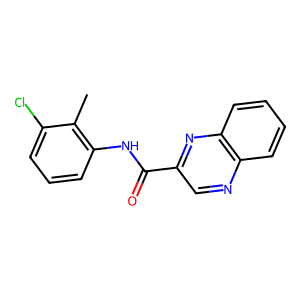
CAS 930478-88-9
:4i
Description:
The chemical substance referred to as "4i" with the CAS number 930478-88-9 is known as a specific compound within the realm of organic chemistry. While detailed characteristics such as its molecular formula, structure, and specific applications may vary, compounds with such identifiers typically exhibit unique physical and chemical properties. These may include solubility in various solvents, stability under certain conditions, and reactivity with other chemical species. Additionally, substances like "4i" may be utilized in various fields, including pharmaceuticals, materials science, or as intermediates in chemical synthesis. To obtain precise information regarding its characteristics, including its molecular weight, boiling point, melting point, and safety data, it is advisable to consult specialized chemical databases or literature that provide comprehensive details on this specific compound. Always ensure to handle such substances with appropriate safety measures and in accordance with regulatory guidelines.
Formula:C16H12ClN3O
Synonyms:- 2-Quinoxalinecarboxamide, N-(3-chloro-2-methylphenyl)-
- 4i
- 5-HT3 antagonist-4i
- CHEMBL1269981
- N-(3-CHLORO-2-METHYLPHENYL) QUINOXALIN-2-CARBOXAMIDE
Sort by
Purity (%)
0
100
|
0
|
50
|
90
|
95
|
100
Found 3 products.
4i
CAS:4i (CHEMBL1269981) is a 5-HT3 receptor antagonist,It modulates the serotonergic system.Formula:C16H12ClN3OPurity:99.49%Color and Shape:SolidMolecular weight:297.74N-(3-Chloro-2-methylphenyl) quinoxalin-2-carboxamide
CAS:N-(3-Chloro-2-methylphenyl) quinoxalin-2-carboxamide is a synthetic peptide that can be used as an activator of ion channels. It has been shown to inhibit the activation of voltage-gated potassium channels, which are involved in the regulation of nerve and muscle cells, by binding to the extracellular amino terminus of the channel. N-(3-Chloro-2-methylphenyl) quinoxalin-2-carboxamide also binds to receptor sites on cells and blocks ligand binding. This drug is an inhibitor of protein interactions that has been shown to bind to both peptides and proteins. The chemical formula for this compound is C8H8ClN5O2 and its CAS number is 930478-88-9.
Formula:C16H12ClN3OPurity:Min. 95%Molecular weight:297.74 g/mol