CAS 933-95-9
:α-Aminocyclopentaneacetic acid
Description:
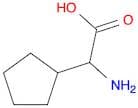
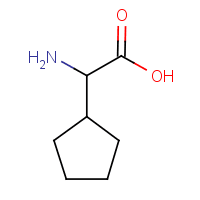
α-Aminocyclopentaneacetic acid, with the CAS number 933-95-9, is an organic compound characterized by its cyclopentane structure and the presence of both an amino group and a carboxylic acid group. This compound is classified as an amino acid, specifically a non-proteinogenic amino acid, due to its unique cyclic structure. It exhibits properties typical of amino acids, such as the ability to form zwitterions in solution, where the amino group is protonated while the carboxylic acid group is deprotonated. The presence of the cyclopentane ring contributes to its rigidity and may influence its reactivity and interaction with biological systems. α-Aminocyclopentaneacetic acid is of interest in various fields, including medicinal chemistry and biochemistry, due to its potential applications in drug design and as a building block for more complex molecules. Its solubility and stability in different solvents can vary, making it important to consider these factors in practical applications. Overall, this compound represents a fascinating intersection of cyclic organic chemistry and amino acid functionality.
Formula:C7H13NO2
InChI:InChI=1S/C7H13NO2/c8-6(7(9)10)5-3-1-2-4-5/h5-6H,1-4,8H2,(H,9,10)
InChI key:InChIKey=XBPKRVHTESHFAA-UHFFFAOYSA-N
SMILES:C(C(O)=O)(N)C1CCCC1
Synonyms:- 2-Amino-2-cyclopentylacetic acid
- 2-Cyclopentylglycine
- Cyclopentaneacetic acid, α-amino-
- Cyclopentaneglycine
- Nsc 12751
- α-Aminocyclopentaneacetic acid
Sort by
Purity (%)
0
100
|
0
|
50
|
90
|
95
|
100
Found 4 products.
Cyclopentaneacetic acid, α-amino-
CAS:Formula:C7H13NO2Purity:97%Color and Shape:SolidMolecular weight:143.18362-Amino-2-cyclopentylacetic acid
CAS:Formula:C7H13NO2Purity:97%Color and Shape:SolidMolecular weight:143.1862-Cyclopentylglycine
CAS:2-Cyclopentylglycine is an analog of the amino acid 2-cyclohexen-1-ylglycine. It is a competitive inhibitor of S-adenosylmethionine synthetase, which inhibits bacterial growth. The synthesis of 2-cyclopentylglycine was achieved through the reaction of alicyclic and cycloleucine with l-threonine in the presence of sodium hydride, followed by hydrolysis with hydrochloric acid. This analog has inhibitory properties on bacteria, which may be due to its ability to inhibit complementarity and biosynthesis. 2-Cyclopentylglycine also inhibits biological activities such as protein synthesis and DNA replication.Formula:C7H13NO2Purity:Min. 95%Molecular weight:143.18 g/mol