CymitQuimica logo

CAS 934-11-2

:

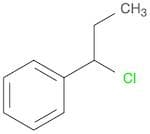
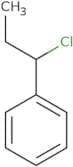
Benzene, (1-chloropropyl)-

Description:
Benzene, (1-chloropropyl)-, also known as 1-chloropropylbenzene, is an organic compound characterized by a benzene ring substituted with a 1-chloropropyl group. Its molecular structure consists of a six-membered aromatic ring bonded to a three-carbon chain that includes a chlorine atom at the terminal position. This compound is typically a colorless liquid with a distinctive aromatic odor. It is moderately soluble in water but more soluble in organic solvents, reflecting its hydrophobic nature due to the presence of the benzene ring. The compound is flammable and should be handled with care, as it can pose health risks through inhalation or skin contact. In terms of reactivity, 1-chloropropylbenzene can undergo typical electrophilic aromatic substitution reactions, as well as nucleophilic substitution due to the presence of the chlorine atom. Its applications may include use as an intermediate in organic synthesis and in the production of various chemical compounds. Proper safety measures should be observed when working with this substance due to its potential toxicity and environmental impact.
Formula:C9H11Cl
Sort by

Purity (%)
0
100
|
0
|
50
|
90
|
95
|
100
Found 3 products.
  • (1-Chloropropyl)benzene

    CAS:
    Formula:C9H11Cl
    Molecular weight:154.6366

    Ref: IN-DA006FY5

    ne
    To inquire
  • (1-Chloropropyl)benzene

    CAS:
    Formula:C9H11Cl
    Molecular weight:154.64

    Ref: 4Z-B-139038

    5mg
    To inquire
    10mg
    To inquire
    25mg
    To inquire
    50mg
    To inquire
    100mg
    To inquire
  • (1-Chloro-propyl)-benzene

    CAS:
    <p>Propiophenone is a chemical compound with the molecular formula CHClO. It is a chlorinated derivative of phenol. Propiophenone is produced by reacting hexamethylenetetramine with chlorine in the presence of a catalyst, such as iron chloride, and an acid, such as hydrochloric acid. The reaction produces two products: (1) 1-chloro-2-methylpropene and (2) propiophenone. The yield of propiophenone can be increased by adding methylcyclohexane to the reaction mixture. This addition increases the rate at which hexamethylenetetramine reacts with chlorine, increasing the amount of 1-chloro-2-methylpropene formed and reducing the formation of other products from hexamethylenetetramine. Propiophenone can be prepared from chloromethylation of benzene followed by hydrolysis or from conversion of propionaldehyde to propiol</p>
    Formula:C9H11Cl
    Purity:Min. 95%
    Molecular weight:154.64 g/mol

    Ref: 3D-AAA93411

    250mg
    410.00€
    2500mg
    1,166.00€