CAS 93435-21-3
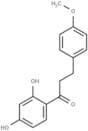
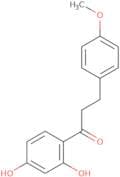
:1-(2,4-dihydroxyphenyl)-3-(4-methoxyphenyl)propan-1-one
Description:
1-(2,4-Dihydroxyphenyl)-3-(4-methoxyphenyl)propan-1-one, also known by its CAS number 93435-21-3, is an organic compound characterized by its complex structure featuring a propanone backbone substituted with both a dihydroxyphenyl group and a methoxyphenyl group. This compound typically exhibits properties associated with phenolic compounds, including potential antioxidant activity due to the presence of hydroxyl groups. The methoxy group can influence its solubility and reactivity, often enhancing lipophilicity. The compound may also display biological activity, making it of interest in pharmaceutical research. Its molecular structure suggests it could participate in various chemical reactions, including oxidation and substitution reactions. Additionally, the presence of multiple aromatic rings may contribute to its stability and interaction with biological systems. Overall, this compound's unique functional groups and structural features make it a subject of interest in both synthetic organic chemistry and medicinal chemistry.
Formula:C16H16O4
InChI:InChI=1/C16H16O4/c1-20-13-6-2-11(3-7-13)4-9-15(18)14-8-5-12(17)10-16(14)19/h2-3,5-8,10,17,19H,4,9H2,1H3
SMILES:COc1ccc(cc1)CCC(=O)c1ccc(cc1O)O
Synonyms:- 1-(2,4-Dihydroxyphenyl)-3-(4-methoxyphenyl)-1-propanone
- 2',4'-Dihydroxy-3-(p-methoxyphenyl)-propiophenone
Sort by
Purity (%)
0
100
|
0
|
50
|
90
|
95
|
100
Found 2 products.
4-O-Methyldavidigenin
CAS:4-O-Methyldavidigenin is a useful organic compound for research related to life sciences. The catalog number is T123909 and the CAS number is 93435-21-3.Formula:C16H16O4Color and Shape:SolidMolecular weight:272.32',4'-Dihydroxy-4-methoxydihydrochalcone
CAS:2',4'-Dihydroxy-4-methoxydihydrochalcone is a natural sweetener, which is derived from citrus fruits, particularly from the peels of oranges and other similar citrus species. This compound belongs to the class of dihydrochalcones, which are known for their distinctive sweetening properties. The mode of action of this compound involves interaction with taste receptors on the tongue, offering a sweetness perception that is considerably more potent than sucrose, while contributing negligible caloric value.Formula:C16H16O4Purity:Min. 95%Molecular weight:272.3 g/mol