CAS 938-40-9
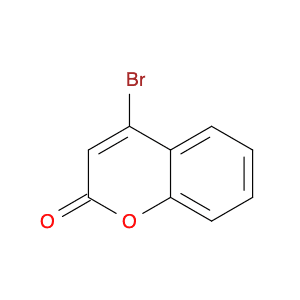
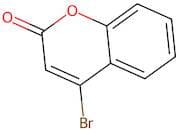
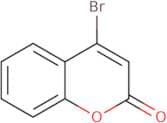
:4-Bromo-2H-1-benzopyran-2-one
Description:
4-Bromo-2H-1-benzopyran-2-one, also known as 4-bromo coumarin, is a chemical compound belonging to the coumarin family, characterized by its fused benzene and pyrone rings. This compound typically appears as a pale yellow to light brown solid and is known for its aromatic properties. It has a molecular formula that includes a bromine atom, which contributes to its reactivity and potential applications in organic synthesis. The presence of the bromine substituent can enhance its utility in various chemical reactions, such as electrophilic substitutions. 4-Bromo-2H-1-benzopyran-2-one is often studied for its biological activities, including potential antimicrobial and anti-inflammatory effects. Additionally, it may serve as a precursor in the synthesis of other complex organic molecules. As with many brominated compounds, safety precautions should be taken when handling it, as bromine can be hazardous. Overall, this compound is of interest in both synthetic organic chemistry and medicinal chemistry due to its unique structural features and potential applications.
Formula:C9H5BrO2
InChI:InChI=1S/C9H5BrO2/c10-7-5-9(11)12-8-4-2-1-3-6(7)8/h1-5H
InChI key:InChIKey=CSMSWYXPXRIHBY-UHFFFAOYSA-N
SMILES:BrC=1C=2C(OC(=O)C1)=CC=CC2
Synonyms:- 2H-1-Benzopyran-2-one, 4-bromo-
- Coumarin, 4-bromo-
- 4-Bromo-2H-1-benzopyran-2-one
- 4-Bromocoumarin
Sort by
Purity (%)
0
100
|
0
|
50
|
90
|
95
|
100
Found 4 products.
4-Bromo-2H-chromen-2-one
CAS:4-Bromo-2H-chromen-2-one is a coumaryl derivative that can be synthesized by the coupling of an aryl boronic acid with a chlorocoumarin. Coumarin derivatives are important for their vibrational, stereoselective, and synthetic properties. Coumarin derivatives have been used to synthesize arylboronates and palladium catalyzed cross couplings. They also inhibit the activity of soybean lipoxygenase in vitro and are used as anti-inflammatory agents. Coumarin derivatives are often found in natural products such as plants and animals. They can be differentiated from other aromatic compounds due to their functional groups, halides, or palladium catalyzed coupling reactions.Formula:C9H5BrO2Purity:Min. 95%Molecular weight:225.04 g/mol