CAS 939-16-2
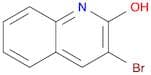
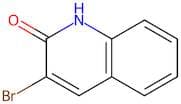
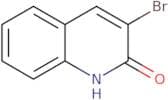
:3-bromoquinolin-2(1H)-one
Description:
3-Bromoquinolin-2(1H)-one is an organic compound characterized by its quinoline structure, which consists of a fused benzene and pyridine ring. The presence of a bromine atom at the 3-position and a carbonyl group at the 2-position contributes to its unique chemical properties. This compound typically appears as a solid and is known for its potential applications in medicinal chemistry, particularly in the development of pharmaceuticals due to its biological activity. It may exhibit properties such as antimicrobial, anti-inflammatory, or anticancer effects, making it of interest in drug discovery. The compound is soluble in organic solvents and may have limited solubility in water. Its reactivity can be influenced by the bromine substituent, which can participate in further chemical reactions, such as nucleophilic substitutions. Safety precautions should be taken when handling this compound, as with many halogenated organic substances, due to potential toxicity and environmental concerns. Overall, 3-bromoquinolin-2(1H)-one serves as a valuable building block in organic synthesis and medicinal chemistry research.
Formula:C9H6BrNO
InChI:InChI=1/C9H6BrNO/c10-7-5-6-3-1-2-4-8(6)11-9(7)12/h1-5H,(H,11,12)
SMILES:c1ccc2c(c1)cc(c(n2)O)Br
Synonyms:- 2(1H)-quinolinone, 3-bromo-
- 3-Bromo-1,2-Dihydroquinolin-2-One
- 3-Bromoquinolin-2(1H)-one
Sort by
Purity (%)
0
100
|
0
|
50
|
90
|
95
|
100
Found 4 products.
3-Bromoquinolin-2(1H)-one
CAS:Formula:C9H6BrNOPurity:96%Color and Shape:SolidMolecular weight:224.05403-Bromoquinolin-2(1H)-one
CAS:Formula:C9H6BrNOPurity:96%Color and Shape:SolidMolecular weight:224.0573-Bromoquinolin-2(1H)-one
CAS:3-Bromoquinolin-2(1H)-one is a linker that can be used in the synthesis of organic compounds. It is a synthetic compound and has been shown to inhibit cancer cell growth by binding to receptor ligands, such as epidermal growth factor receptor (EGFR) and vascular endothelial growth factor receptor 2 (VEGFR2). 3-Bromoquinolin-2(1H)-one has also been shown to inhibit the activity of EGFR ligand inhibitors, such as erlotinib and gefitinib. This linker can be used in bifunctional molecules with amide or hydroxy groups. It is resistant to bacteria, making it ideal for use in conjugates with proteins or peptides.
Formula:C9H6BrNOPurity:Min. 95%Molecular weight:224.05 g/mol