CAS 939-17-3
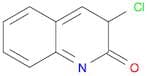
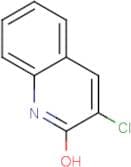
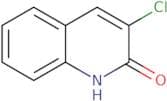
:3-chloroquinolin-2(1H)-one
Description:
3-Chloroquinolin-2(1H)-one is a heterocyclic organic compound characterized by a quinoline structure with a chlorine substituent at the 3-position and a carbonyl group at the 2-position. This compound typically appears as a solid and is known for its pale yellow to off-white color. It has a molecular formula that reflects its complex structure, which includes both aromatic and carbonyl functionalities, contributing to its chemical reactivity and potential biological activity. The presence of the chlorine atom can influence its solubility and reactivity, making it a subject of interest in medicinal chemistry and material science. 3-Chloroquinolin-2(1H)-one may exhibit various pharmacological properties, including antimicrobial and antitumor activities, due to its ability to interact with biological targets. Additionally, it can serve as an intermediate in the synthesis of more complex organic molecules. Proper handling and storage are essential, as with many chemical substances, to ensure safety and stability.
Formula:C9H6ClNO
InChI:InChI=1/C9H6ClNO/c10-7-5-6-3-1-2-4-8(6)11-9(7)12/h1-5H,(H,11,12)
SMILES:c1ccc2c(c1)cc(c(n2)O)Cl
Synonyms:- 3-Chloroquinolin-2-one
Sort by
Purity (%)
0
100
|
0
|
50
|
90
|
95
|
100
Found 3 products.
3-Chloroquinolin-2(1H)-one
CAS:3-Chloroquinolin-2(1H)-one is an antimicrobial agent that contains a chlorine atom. It is used in the treatment of cancer, and has been shown to inhibit the replication of DNA by binding to the nitrogen atoms in DNA. 3-Chloroquinolin-2(1H)-one is also used as an anti-infective agent and has been shown to have inhibitory activities against Gram positive bacteria, such as Staphylococcus aureus, and Gram negative bacteria, such as Escherichia coli. 3-Chloroquinolin-2(1H)-one binds to the chloride ion on the bacterial cell wall membrane, which prevents the transport of essential nutrients into the cell and leads to cell death. The chemical structure of 3-chloroquinein-2(1H)-one consists of two enantiomers (mirror images), one being more active than the other. The less active form can be convertedFormula:C9H6ClNOPurity:Min. 95%Molecular weight:179.6 g/mol