CAS 94-26-8
:Butylparaben
Description:
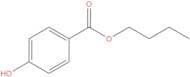
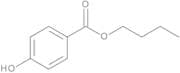
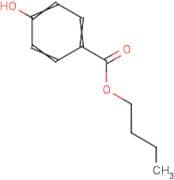
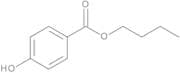
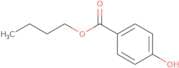
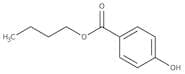
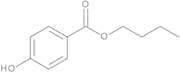
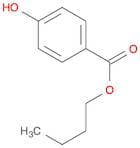
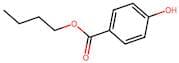
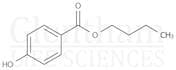
Butylparaben, with the CAS number 94-26-8, is an organic compound belonging to the paraben family, which are widely used as preservatives in cosmetics, pharmaceuticals, and food products. It is a colorless to white crystalline solid that is soluble in alcohol and oils but has limited solubility in water. Butylparaben is known for its antimicrobial properties, effectively inhibiting the growth of bacteria and fungi, which helps extend the shelf life of products. Its chemical structure features a butyl group attached to a para-hydroxybenzoic acid moiety, contributing to its effectiveness as a preservative. While generally recognized as safe in low concentrations, there has been ongoing debate regarding its potential endocrine-disrupting effects, leading to regulatory scrutiny in some regions. Butylparaben is typically used in conjunction with other parabens to enhance preservative efficacy and is often found in lotions, shampoos, and various personal care items. As with all chemical substances, proper handling and awareness of potential sensitivities are recommended.
Formula:C11H14O3
InChI:InChI=1S/C11H14O3/c1-2-3-8-14-11(13)9-4-6-10(12)7-5-9/h4-7,12H,2-3,8H2,1H3
InChI key:InChIKey=QFOHBWFCKVYLES-UHFFFAOYSA-N
SMILES:C(OCCCC)(=O)C1=CC=C(O)C=C1
Synonyms:- 4-(Butoxycarbonyl)phenol
- 4-Hidroxibenzoato De Butilo
- 4-Hydroxybenzoate de butyle
- 4-Hydroxybenzoesaeure-Butylester
- 4-Hydroxybenzoic acid butyl ester
- Aseptoform Butyl
- Benzoate, 4-Hydroxy-, Butyl
- Benzoic acid, p-hydroxy-, butyl ester
- Butoben
- Butyl 4-Hydroxybenzoate
- Butyl Butex
- Butyl Paraben
- Butyl Tegosept
- Butyl chemosept
- Butyl p-hydroxybenzoate
- Butyl parabens
- Butyl parasept
- Butyl-4-hydroxybenzoat
- Butylparaben
- Mekkings B
- Mekkins B
- Nipabutyl
- Nsc 13164
- Nsc 8475
- P-Oxybutylbenzoate
- Preserval B
- SPF
- Solbrol B
- Tegosept B
- Tegosept Butyl
- n-Butyl 4-hydroxybenzoate
- n-Butyl p-hydroxybenzoate
- n-Butylparaben
- p-Hydroxybenzoic acid butyl ester
- See more synonyms
Sort by
Purity (%)
0
100
|
0
|
50
|
90
|
95
|
100
Found 22 products.
Butyl 4-Hydroxybenzoate
CAS:Formula:C11H14O3Purity:>99.0%(GC)(T)Color and Shape:White to Almost white powder to crystalMolecular weight:194.23n-Butyl 4-hydroxybenzoate, 99+%
CAS:<p>This Thermo Scientific Chemicals brand product was originally part of the Alfa Aesar product portfolio. Some documentation and label information may refer to the legacy brand. The original Alfa Aesar product / item code or SKU reference has not changed as a part of the brand transition to Thermo Sci</p>Formula:C11H14O3Purity:99+%Color and Shape:White to pale cream, Powder or crystalline powderMolecular weight:194.23BUTYL PARAHYDROXYBENZOATE CRS
CAS:<p>BUTYL PARAHYDROXYBENZOATE CRS</p>Formula:C11H14O3Molecular weight:194.2271Butylparaben
CAS:Carboxylic acids with phenol function but without other oxygen function, their anhydrides, halides, peroxides etc, nesoiFormula:C11H14O3Color and Shape:Colorless White PowderMolecular weight:194.09429Butylparaben
CAS:<p>Butylparaben (Butyl 4-hydroxybenzoate) is a standardized chemical allergen, increasing histamine release, and cell-mediated immunity.</p>Formula:C11H14O3Purity:98.15%Color and Shape:Small Colorless Crystals Or Powder Tongue Aqueous Solutions Slightly Acidic To Litmus (Ntp 1992)Molecular weight:194.23Butyl 4-hydroxybenzoate
CAS:Formula:C11H14O3Purity:≥ 99.0%Color and Shape:White to almost white powder or colourless crystalsMolecular weight:194.234-Hydroxybenzoic acid-n-butyl ester
CAS:Controlled ProductFormula:C11H14O3Color and Shape:NeatMolecular weight:194.234-Hydroxybenzoic acid-n-butyl ester 1000 µg/mL in Acetonitrile
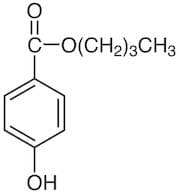
CAS:Formula:C11H14O3Color and Shape:Single SolutionMolecular weight:194.23Butyl 4-Hydroxybenzoate [for Biochemical Research]
CAS:Formula:C11H14O3Purity:>99.0%(GC)(T)Color and Shape:White to Almost white powder to crystalMolecular weight:194.23GB 5009.31-2016 Preservatives Mixture 166 100 µg/mL in Methanol
CAS:Controlled ProductColor and Shape:MixtureButyl 4-hydroxybenzoate
CAS:<p>Butyl 4-hydroxybenzoate</p>Formula:C11H14O3Purity:99%Color and Shape: colourless to white powderMolecular weight:194.22705g/molButyl p-hydroxybenzoate
CAS:Benzoic acid derivativeFormula:C11H14O3Purity:≥ 98.0 % (HPLC)Color and Shape:PowderMolecular weight:194.23Butyl 4-Hydroxybenzoate(Butyl Paraben)
CAS:Controlled Product<p>Applications An antimicrobial agent used in cosmetic products.<br>References Gilliland, D., et al.: J. Appl. Bacteriol., 72, 258 (1992), Routledge, E., et al.: Toxicol. Appl. Pharmacol., 153, 12 (1998), Miller, C., et al.: J. Biol. Chem., 272, 32824 (1997), Nakagawa, Y., et al.: Biochem. Pharmacol., 55, 1907 (1998),<br></p>Formula:C11H14O3Color and Shape:WhiteMolecular weight:194.23Butyl 4-hydroxybenzoate
CAS:Formula:C11H14O3Purity:97%Color and Shape:No data available.Molecular weight:194.23Butyl paraben
CAS:<p>Butyl parabens are a group of preservatives that are commonly used in cosmetics, pharmaceuticals, and food products to protect against microbial growth. They have been shown to have anti-inflammatory activity in humans and animals. Butyl parabens may also be produced during the treatment of wastewater by benzalkonium chloride. This study found that butylparaben concentrations were higher in the treated wastewater than in the untreated wastewater. Butylparaben is toxic to 3T3-L1 preadipocytes, which may be due to its ability to inhibit protein synthesis and cell division. The matrix effect caused by butylparaben on the substrate film has been studied extensively. The reaction solution between p-hydroxybenzoic acid and butylparaben was investigated by applying it as a preservative onto a film of poly(vinyl acetate) at different rates of concentration.</p>Formula:C11H14O3Purity:Min. 95%Color and Shape:PowderMolecular weight:194.23 g/mol









![Butyl 4-Hydroxybenzoate [for Biochemical Research]](/_next/image/?url=https%3A%2Fstatic.cymitquimica.com%2Fproducts%2F3B%2Fthumb%2FB3771.jpg&w=3840&q=75)