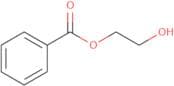
CAS 94-33-7
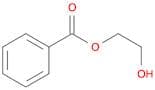
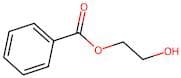
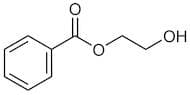
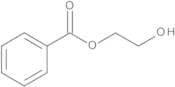
:2-Hydroxyethyl benzoate
- 1,2-Ethanediol, 1-benzoate
- 1,2-Ethanediol, monobenzoate
- 2-(Benzoyloxy)ethanol
- 2-Benzoyloxy-1-hydroxyethane
- 2-Hydroxyethyl phenylacetate
- Ai3-06584
- Ethylene glycol monobenzoate
- Ethylene glycol, monobenzoate (8CI)
- Ethyleneglycol monobenzoate
- Nsc 57378
- beta-Hydroxyethyl benzoate
- β-Hydroxyethyl benzoate
- 2-Hydroxyethyl benzoate
- See more synonyms
2-Hydroxyethyl Benzoate
CAS:Formula:C9H10O3Purity:>95.0%(GC)Color and Shape:White to Light yellow powder to crystalMolecular weight:166.182-Hydroxyethyl Benzoate(Ethylene Glycol Monobenzoate)
CAS:Controlled ProductApplications Ethylene Glycol Monobenzoate, is a reagent that can be used as an intermediate in a variety of chemical and biochemical reactions. It is used as an intermediate in the preparation of 1,2-Ethanediol Disodium Salt (E890125), which is the result of the nucleophilic attack on its carbonyl group.
References Khouri, F. et al.: J. Am. Chem. Soc., 108, 6683 (1986);Formula:C9H10O3Color and Shape:NeatMolecular weight:166.172-Hydroxyethyl benzoate
CAS:2-Hydroxyethyl benzoate is a model system that has been used to study the mechanism of hydrolysis of an ester with a hydroxyl group. The reaction products are a metal hydroxide and a chloride ion. 2-Hydroxyethyl benzoate is an antimicrobial agent that has shown activity against bacteria, fungi, and protozoa. It is thought to work by reacting with fatty acids in the cell membrane, leading to disruption of the membrane and leakage of cellular contents. It also reacts with chloride ions to form hydroxybenzoic acid and water molecules. The activation energy for this reaction was found to be around 19 kJ mol−1.
Formula:C9H10O3Purity:Min. 95%Molecular weight:166.17 g/mol