CAS 94-65-5
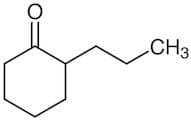
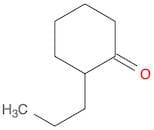
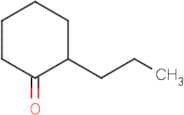
:2-Propylcyclohexanone
Description:
2-Propylcyclohexanone is a cyclic ketone characterized by a cyclohexane ring with a propyl group and a carbonyl group (C=O) attached to it. This compound typically appears as a colorless to pale yellow liquid with a distinctive odor. It has a moderate boiling point and is relatively soluble in organic solvents, while being less soluble in water due to its hydrophobic nature. The presence of the ketone functional group contributes to its reactivity, making it a useful intermediate in organic synthesis and industrial applications. 2-Propylcyclohexanone can undergo various chemical reactions, including nucleophilic addition and oxidation. Safety considerations include potential irritant effects on the skin and eyes, and it should be handled with appropriate precautions in a well-ventilated area. Its applications span across the production of fragrances, flavors, and as a solvent in chemical processes. Overall, 2-Propylcyclohexanone is a versatile compound with significant relevance in both laboratory and industrial settings.
Formula:C9H16O
InChI:InChI=1S/C9H16O/c1-2-5-8-6-3-4-7-9(8)10/h8H,2-7H2,1H3
InChI key:InChIKey=OCJLPZCBZSCVCO-UHFFFAOYSA-N
SMILES:C(CC)C1C(=O)CCCC1
Synonyms:- 2-(n-Propyl)cyclohexanone
- 2-Propylcyclohexan-1-one
- Cyclohexanone, 2-propyl-
- Nsc 54015
- 2-Propylcyclohexanone
Sort by
Purity (%)
0
100
|
0
|
50
|
90
|
95
|
100
Found 4 products.
2-Propylcyclohexanone
CAS:Formula:C9H16OPurity:>98.0%(GC)Color and Shape:Colorless to Light yellow to Light orange clear liquidMolecular weight:140.232-Propylcyclohexanone
CAS:2-Propylcyclohexanone is a competitive inhibitor of the binding of choline to acetylcholine receptors in rat brain membranes. It has a significant inhibitory effect on the binding of acetylcholine to its receptor, with an inhibition constant (Ki) of 0.2 mM. 2-Propylcyclohexanone also inhibits bacterial growth by interacting with the active site of enzymes that catalyze the synthesis or breakdown of biomolecules. 2-Propylcyclohexanone has shown antibacterial activity against both Gram-positive and Gram-negative bacteria, including Staphylococcus aureus, Pseudomonas aeruginosa, and Escherichia coli. The mechanism is not known for this drug's anti-bacterial activity, but it may be due to its ability to bind to substrates in the active site of enzymes that catalyze the synthesis or breakdown of biomolecules or inhibit adsorption equilibrium by actingFormula:C9H16OPurity:Min. 95%Molecular weight:140.23 g/mol