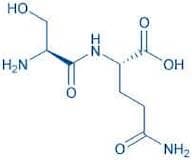
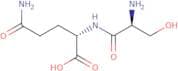
CAS 94421-66-6
:ser-gln
Description:
The chemical substance known as "ser-gln," with the CAS number 94421-66-6, is a dipeptide composed of the amino acids serine (Ser) and glutamine (Gln). Dipeptides are formed through the condensation of two amino acids, resulting in a peptide bond. Ser-gln exhibits characteristics typical of peptides, including solubility in water due to the polar nature of its constituent amino acids. It plays a role in various biological processes, including protein synthesis and cellular signaling. The presence of serine contributes to its potential involvement in enzymatic reactions and metabolic pathways, while glutamine is known for its role in nitrogen transport and as a precursor for nucleotide synthesis. Additionally, ser-gln may have implications in nutrition and health, particularly in supporting immune function and gut health. Its stability and reactivity can be influenced by environmental factors such as pH and temperature, which are important considerations in both laboratory and biological contexts.
Formula:C8H15N3O5
Sort by
Purity (%)
0
100
|
0
|
50
|
90
|
95
|
100
Found 2 products.
H-Ser-Gln-OH
CAS:Bachem ID: 4006251.
Formula:C8H15N3O5Purity:> 99%Color and Shape:White PowderMolecular weight:233.22H-Ser-Gln-OH
CAS:H-Ser-Gln-OH is an analog of the amino acid serine. It is a programmed protein that is responsible for DNA damage and is incrementally produced during radiation therapy. This protein phosphorylates at the end of a homologous sequence, which damages the DNA strand. H-Ser-Gln-OH can also phosphorylate other proteins, leading to cell death by apoptosis or necrosis. The rate of H-Ser-Gln-OH production may be increased in plants by photorespiration and endoreduplication, as well as by reactive oxygen species (ROS). The production of H-Ser-Gln-OH can be inhibited by hydrogen peroxide scavengers such as catalase or superoxide dismutase.Formula:C8H15N3O5Purity:Min. 95%Molecular weight:233.22 g/mol