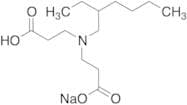
CAS 94441-92-6
:β-Alanine, N-(2-carboxyethyl)-N-(2-ethylhexyl)-, sodium salt (1:1)
Description:
β-Alanine, N-(2-carboxyethyl)-N-(2-ethylhexyl)-, sodium salt (1:1), with the CAS number 94441-92-6, is a chemical compound that belongs to the class of amino acids and their derivatives. It features a β-alanine backbone, which is a non-proteinogenic amino acid, and is characterized by the presence of a carboxyethyl group and an ethylhexyl substituent. This compound is typically a white to off-white solid and is soluble in water due to the presence of the sodium salt form, which enhances its solubility and bioavailability. The sodium salt form also contributes to its stability and ease of handling in various applications. β-Alanine derivatives are often studied for their potential roles in biochemical processes, including their involvement in the synthesis of dipeptides and their effects on muscle performance and endurance. Additionally, the compound may exhibit surfactant properties, making it useful in various industrial applications. As with many chemical substances, safety data should be consulted for handling and usage guidelines.
Formula:C14H27NO4·Na
InChI:InChI=1S/C14H27NO4.Na/c1-3-5-6-12(4-2)11-15(9-7-13(16)17)10-8-14(18)19;/h12H,3-11H2,1-2H3,(H,16,17)(H,18,19);
InChI key:InChIKey=JWWCHBDQFFMRBC-UHFFFAOYSA-N
SMILES:N(CC(CCCC)CC)(CCC(O)=O)CCC(O)=O.[Na]
Synonyms:- Amphotensid EH
- Sodium 3-(2-Carboxyethyl-(2-Ethylhexyl)Amino)Propanoate
- Sodium N-(2-carboxyethyl)-N-(2-ethylhexyl)-beta-alaninate
- beta-Alanine, N-(2-carboxyethyl)-N-(2-ethylhexyl)-, monosodium salt
- β-Alanine, N-(2-carboxyethyl)-N-(2-ethylhexyl)-, monosodium salt
- β-Alanine, N-(2-carboxyethyl)-N-(2-ethylhexyl)-, sodium salt (1:1)
- Sodium 2-ethylhexyliminodipropionate
- ColaTeric ZF 50
Sort by
Purity (%)
0
100
|
0
|
50
|
90
|
95
|
100
Found 2 products.
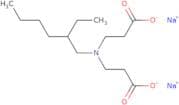
Amphotensid eh
CAS:<p>Amphotensid eh is a potent inhibitor of kinases, which are enzymes that play a critical role in the regulation of cell cycle and protein signaling pathways. It has shown promising results in the treatment of cancer and tumors by inhibiting the activity of cyclin-dependent kinases (CDKs), which are overexpressed in many human cancers. Amphotensid eh has been found to induce apoptosis or programmed cell death in cancer cells by blocking the activity of CDKs, leading to the inhibition of tumor growth. This medicinal compound has also been studied for its potential as an anticancer agent due to its ability to target multiple kinases simultaneously. In Chinese medicine, Amphotensid eh has been used for centuries as a natural remedy for various ailments including cancer.</p>Formula:C14H25NNa2O4Purity:Min. 95%Molecular weight:317.33 g/mol