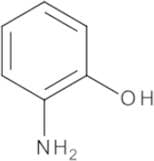
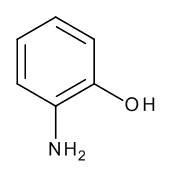
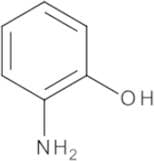
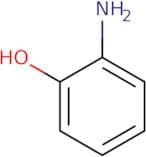
CAS 95-55-6
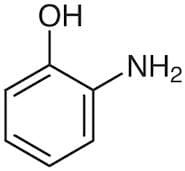
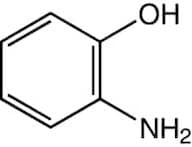
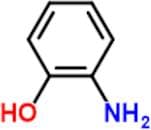
:2-Aminophenol
- (2-Hydroxyphenyl)amine
- 1-Amino-2-hydroxybenzene
- 1-Hydroxy-2-aminobenzene
- 2-Amino Phenol
- 2-Amino-1-hydroxybenzene
- 2-Aminofenol
- 2-Aminophenyl alcohol
- 2-Hydroxyaniline
- 2-Hydroxybenzenamine
- BASF Ursol 3GA
- Benzofur GG
- Fouramine OP
- Nako Yellow 3GA
- Nsc 1534
- Nsc 226261
- O-Amino Phenol
- O-Aminophenol
- Ortho Amino Phenol
- Oxidation Base 17
- Paradone Olive Green B
- Pelagol 3GA
- Pelagol Grey GG
- Phenol, 2-amino-
- Phenol, o-amino-
- Rodol 2G
- Zoba 3GA
- o-Aminohydroxybenzene
- o-Hydroxyaniline
- o-Hydroxyphenylamine
- C.I. 76520
- C.I. Oxidation Base 17
- 2-Aminophenol
- LABOTEST-BB LTBB000484
- benzofurgg
- AKOS BBS-00004290
- OAP
- 2-Hydroxyaniline H
- 2-Hydroxyanaline
- Benzene, 1hydroxy-2-amine-
- 2-amino-pheno
- See more synonyms
2-Aminophenol
CAS:Formula:C6H7NOPurity:>99.0%(GC)Color and Shape:White to Brown powder to crystalMolecular weight:109.132-Aminophenol, 99%
CAS:2-Aminophenol is used to make dyes and pharmaceuticals. It is also used as a reagent for the synthesis of heterocyclic compounds. This Thermo Scientific Chemicals brand product was originally part of the Alfa Aesar product portfolio. Some documentation and label information may refer to the legacy bFormula:C6H7NOPurity:99%Color and Shape:Crystals or powder or crystalline powder, White to grey to brownMolecular weight:109.13Mesalazine (Mesalamine) EP Impurity C
CAS:Formula:C6H7NOColor and Shape:Grey SolidMolecular weight:109.132-Aminophenol
CAS:Formula:C6H7NOPurity:≥ 98.0%Color and Shape:White to off-white, beige, grey or brown crystals or powderMolecular weight:109.13Mesalazine EP Impurity C
CAS:Controlled ProductFormula:C6H7NOColor and Shape:BeigeMolecular weight:109.132-Aminophenol
CAS:Impurity Mesalazine EP Impurity C
Applications 2-Aminophenol is an isomer of 4-Aminophenol (A618920) and is used as a reagent for the synthesis of heterocyclic compounds and dyes.
Not a dangerous good if item is equal to or less than 1g/ml and there is less than 100g/ml in the package
References Pan, E., et al.: Chem. Sci., 4, 482 (2013); Meek, A.R., et al.: Can. J. Chem., 90, 865 (2012); Kiorpelidous, E., et al.: Chem. Res. Toxicol., 25, 2054 (2012);Formula:C6H7NOColor and Shape:BeigeMolecular weight:109.132-Aminophenol
CAS:2-Aminophenol is a water soluble redox catalyst that is used in wastewater treatment. It has been shown to be a potent antimicrobial agent against bacteria, fungi, and viruses. 2-Aminophenol is active against the Gram-positive bacteria Staphylococcus aureus and Enterococcus faecalis. The mechanism of the reaction of 2-aminophenol with picolinic acid is believed to be due to intramolecular hydrogen bonding between nitrogen atoms (N) and amines (NH). The binding site for this reaction is not well understood, but it may involve an electrochemical mechanism such as constant pressure or electrochemical impedance spectroscopy. 2-Aminophenol also participates in electron transfer reactions involving NAD+/NADH or cytochrome c/cytochrome c oxidase.
Formula:C6H7NOPurity:Min. 98 Area-%Color and Shape:Brown White PowderMolecular weight:109.13 g/mol