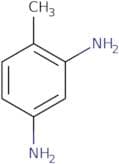
CAS 95-80-7
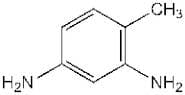
:2,4-Diaminotoluene
- 1,3-Benzenediamine, 4-methyl-
- 1,3-Diamino-4-methylbenzene
- 2,4-Diamino toluene
- 2,4-Diamino-1-methylbenzene
- 2,4-Diaminotoluol
- 2,4-Toluenediamine
- 2,4-Toluilenediamine
- 2,4-Tolylenediamine
- 2-Methyl-1,5-benzenediamine
- 3-Amino-4-methylaniline
- 4-Methyl-1,3-benzenediamine
- 4-Methyl-1,3-diaminobenzene
- 4-Methyl-1,3-phenylenediamine
- 4-Methyl-m-phenylendiamin
- 4-Methyl-m-phenylenediamine
- 4-Methylbenzene-1,3-Diamine
- 4-Methylbenzene-1,3-Diamine Dihydrochloride
- 4-Methylbenzene-1,3-Diamine Hydrochloride (1:1)
- 4-Metil-M-Fenilendiamina
- Brown for Fur T
- Eucanine GB
- Fouramine J
- Fourrine 94
- Fourrine M
- MTD
- Nako TMT
- Pelagol Grey J
- Pelagol J
- Phenylene-1,3-Diamine, 4-Methyl-
- Pontamine Developer TN
- Renal MD
- TDA
- TDA (diamine)
- Toluene-2,4-diamine
- Un3418
- Zoba GKE
- m-Toluenediamine
- m-Toluylenediamine
- m-Tolylenediamine
- C.I. Oxidation Base 35
- 2,4-Diaminotoluene
- C.I.Oxidation base
- See more synonyms
2,4-Diaminotoluene, 98%
CAS:This Thermo Scientific Chemicals brand product was originally part of the Alfa Aesar product portfolio. Some documentation and label information may refer to the legacy brand. The original Alfa Aesar product / item code or SKU reference has not changed as a part of the brand transition to Thermo SciFormula:C7H10N2Purity:98%Color and Shape:Crystals or powder or crystalline powder or flakes or lumpy/fused solid, Brown to grey to dark greyMolecular weight:122.17Toluene-2,4-Diamine (4-Methylbenzene-1,3-diamine)
CAS:O-, m-, p-phenylenediamine, diaminotoluenes, and their derivatives salts thereofFormula:C7H10N2Color and Shape:Off-White Crystalline PowderMolecular weight:122.0844GB 31604.52-2021 Primary Aromatic Amine Mixtures 36 1000 µg/mL in Acetonitrile
CAS:Controlled Product- 101-14-4
- 101-77-9
- 101-80-4
- 106-47-8
- 106-50-3
- 108-45-2
- 119-90-4
- 119-93-7
- 120-71-8
- 1208-52-2
- 137-17-7
- 139-65-1
- 60-09-3
- 615-05-4
- 62-53-3
- 6582-52-1
- 838-88-0
- 87-62-7
- 90-04-0
- 91-59-8
- 91-94-1
- 92-67-1
- 92-87-5
- 95-53-4
- 95-68-1
- 95-69-2
- 95-80-7
- 97-56-3
- 99-55-8
Color and Shape:Mixture2,4-Diaminotoluene
CAS:Formula:C7H10N2Purity:>98.0%(GC)(T)Color and Shape:White to Gray to Brown powder to crystalMolecular weight:122.17GB/T 17592-2011 Azo Dyes Mixture 128 1000 µg/mL in Acetonitrile
CAS:Controlled Product- 101-14-4
- 101-77-9
- 101-80-4
- 106-47-8
- 106-50-3
- 119-90-4
- 119-93-7
- 120-71-8
- 137-17-7
- 139-65-1
- 60-09-3
- 615-05-4
- 62-53-3
- 838-88-0
- 87-62-7
- 90-04-0
- 91-59-8
- 91-94-1
- 92-67-1
- 92-87-5
- 95-53-4
- 95-68-1
- 95-69-2
- 95-80-7
- 97-56-3
- 99-55-8
Color and Shape:Mixture2,4-Diaminotoluene
CAS:Controlled ProductApplications Aromatic amines likely to have high carcinogenic potency. QSARs of aromatic amines.
Not a dangerous good if item is equal to or less than 1g/ml and there is less than 100g/ml in the package
References Franke, R., et al.: Carcinogenesis, 22, 1561 (2001), Benigni, R., et al.: Chem. Rev., 105, 1767 (2005), Benigni, R., et al.: Environ. Mol. Mutagen., 50, 152 (2009),Formula:C7H10N2Color and Shape:Light BrownMolecular weight:122.172,4-Diaminotoluene-13C6
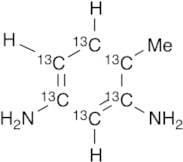
CAS:Controlled ProductApplications 2,4-Diaminotoluene-13C6 is a isotope labelled analog of 2,4-Diaminotoluene (D416780). 2,4-Diaminotoluene is an aromatic amines likely to have high carcinogenic potency. QSARs of aromatic amines.
Not a dangerous good if item is equal to or less than 1g/ml and there is less than 100g/ml in the package
References Franke, R., et al.: Carcinogenesis, 22, 1561 (2001), Benigni, R., et al.: Chem. Rev., 105, 1767 (2005), Benigni, R., et al.: Environ. Mol. Mutagen., 50, 152 (2009),Formula:C13C6H10N2Color and Shape:NeatMolecular weight:128.122,4-Diaminotoluene
CAS:Controlled Product2,4-Diaminotoluene is a chemical that belongs to the group of aromatic amines. It is used as an intermediate in the production of dyes and other organic compounds. 2,4-Diaminotoluene has been shown to induce hepatic enzymes in rats and can cause liver injury in humans. The effects on human health are not well understood, but it may be genotoxic. 2,4-Diaminotoluene can also cause damage to bacterial DNA by inhibiting bacterial growth and enzyme activity. This chemical has been shown to have a negative effect on wastewater treatment because it inhibits the activity of microorganisms involved in the process.
Formula:C7H10N2Purity:Min. 95%Color and Shape:PowderMolecular weight:122.17 g/molRef: 3D-FD21501
Discontinued product