CAS 956-75-2
:P-nitrophenyl caproate
Description:
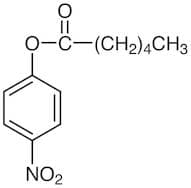
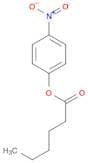
P-nitrophenyl caproate, with the CAS number 956-75-2, is an organic compound that belongs to the class of esters. It is derived from caproic acid and p-nitrophenol, featuring a p-nitrophenyl group attached to the caproate moiety. This compound typically appears as a yellowish solid or liquid, depending on its purity and temperature. P-nitrophenyl caproate is known for its use as a substrate in biochemical assays, particularly in studies involving esterases and lipases, due to its ability to release p-nitrophenol upon hydrolysis. The presence of the nitro group enhances its reactivity and solubility in organic solvents. Additionally, it exhibits moderate stability under standard laboratory conditions but may be sensitive to moisture and light. Safety precautions should be taken when handling this compound, as it may pose health risks if ingested or inhaled, and appropriate personal protective equipment should be used. Overall, p-nitrophenyl caproate serves as a valuable tool in organic synthesis and enzymatic studies.
Formula:C12H15NO4
InChI:InChI=1/C12H15NO4/c1-2-3-4-5-12(14)17-11-8-6-10(7-9-11)13(15)16/h6-9H,2-5H2,1H3
SMILES:CCCCCC(=O)Oc1ccc(cc1)N(=O)=O
Synonyms:- n-Caproic acid 4-nitrophenyl ester
- 4-Nitrophenyl Hexanoate
Sort by
Purity (%)
0
100
|
0
|
50
|
90
|
95
|
100
Found 5 products.
4-Nitrophenyl Hexanoate
CAS:Formula:C12H15NO4Purity:>98.0%(GC)Color and Shape:Light yellow to Brown clear liquidMolecular weight:237.26Hexanoic acid, 4-nitrophenyl ester
CAS:Formula:C12H15NO4Purity:96%Color and Shape:LiquidMolecular weight:237.25184-Nitrophenyl hexanoate
CAS:Formula:C12H15NO4Purity:95%Color and Shape:Liquid, No data available.Molecular weight:237.2554-Nitrophenyl hexanoate
CAS:4-Nitrophenyl hexanoate is an acyl phosphate monoclonal antibody (aMAb) that binds to the enzyme hydroxylase, which converts 4-nitrophenol to p-nitrophenol. This aMAb has been shown to inhibit the activity of this enzyme and its conversion of 4-nitrophenol to p-nitrophenol, leading to its use in biochemical studies as a model for monooxygenase enzymes. The reaction mechanism for this aMAb is believed to be that it reacts with the acyl chain of hydroxylase and hinders the active site from binding 4-nitrophenol. 4-Nitrophenyl hexanoate also has a cationic surfactant that can bind or react with proteins or nucleic acids by electrostatic interactions or hydrogen bonding. It is also able to form polymers with other monoclonal antibodies and has been used in protein purification processesFormula:C12H15NO4Purity:Min. 98 Area-%Color and Shape:Colorless Clear LiquidMolecular weight:237.25 g/mol