CymitQuimica logo

CAS 95632-46-5

:

SUC-ALA-PRO-PNA

Description:
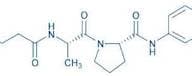
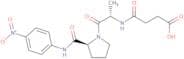
SUC-ALA-PRO-PNA, also known as a peptide compound, is characterized by its structure, which consists of a sequence of amino acids, specifically a succinyl group linked to alanine, proline, and a para-nitroanilide (PNA) moiety. This compound is often utilized in biochemical research, particularly in studies involving enzyme activity and peptide synthesis. The presence of the succinyl group enhances solubility and stability, while the PNA component can serve as a chromogenic or fluorogenic tag, allowing for the detection of enzymatic reactions. SUC-ALA-PRO-PNA is typically used in assays to measure the activity of proteolytic enzymes, as it can be cleaved by these enzymes, releasing a measurable product. Its molecular properties, such as solubility and reactivity, make it suitable for various laboratory applications, including drug discovery and development. As with many peptide derivatives, handling and storage conditions are crucial to maintain its integrity and functionality in experimental settings.
Formula:C18H22N4O7
Synonyms:
  • L-Prolinamide,N-(3-carboxy-1-oxopropyl)-L-alanyl-N-(4-nitrophenyl)-
  • SUC-ALA-PRO-PNA
  • Suc-AP-pNA
  • succinyl-alanyl-proline-p-nitro-anilide
Sort by

Purity (%)
0
100
|
0
|
50
|
90
|
95
|
100
Found 2 products.
  • Suc-Ala-Pro-pNA

    CAS:
    Suc-AP-pNA, chromogenic substrate for prolyl endopeptidase.
    Formula:C18H22N4O7
    Purity:> 98%
    Molecular weight:406.4

    Ref: 01-4028677

    50mg
    432.00€
    250mg
    1,656.00€
  • Suc-Ala-Pro-pNA

    CAS:
    <p>Suc-Ala-Pro-pNA is a glycoprotein that has been shown to have a number of different functions. It is an inhibitor of tissue culture, and it has been shown to inhibit the growth of cervical cancer cells by binding to epidermal growth factor (EGF). It also inhibits peptide hormones such as prolactin and insulin, which can lead to breast cancer. Suc-Ala-Pro-pNA may be clinically relevant for treatment of carcinoma cell lines due to its ability to bind platinum-based chemotherapy drugs. This protein has been shown to be expressed on the surface of mammary carcinoma cells, where it acts as a receptor for the monoclonal antibody mcf7. The protein's function as a surface glycoprotein means that it can act as a marker for cancerous tumors in the body.</p>
    Formula:C18H22N4O7
    Purity:Min. 95%
    Molecular weight:406.39 g/mol

    Ref: 3D-FS110812

    50mg
    863.00€
    100mg
    1,200.00€
    250mg
    2,543.00€