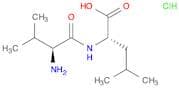
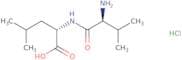
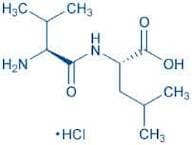
CAS 95977-55-2
:val-leu hydrochloride
Description:
Val-leu hydrochloride, also known as valyl-leucine hydrochloride, is a dipeptide composed of the amino acids valine and leucine linked by a peptide bond. It is typically presented as a white to off-white crystalline powder and is soluble in water, which makes it suitable for various applications in biochemistry and pharmaceuticals. The substance is often used in research settings, particularly in studies related to protein synthesis and metabolism. As a hydrochloride salt, it is stable under standard conditions but should be stored in a cool, dry place to maintain its integrity. Val-leu hydrochloride may exhibit biological activity, influencing cellular processes and potentially serving as a nutritional supplement. Its safety profile indicates that it is generally well-tolerated, although, like any chemical substance, it should be handled with care, following appropriate safety guidelines. Overall, val-leu hydrochloride is a valuable compound in both scientific research and potential therapeutic applications.
Formula:C11H22N2O3.HCl
Synonyms:- H-Val-Leu-Oh Hcl
Sort by
Purity (%)
0
100
|
0
|
50
|
90
|
95
|
100
Found 3 products.
H-Val-Leu-OH·HCl
CAS:H-Val-Leu-OH·HCl is a hydrolytic cleavage product of the covalent adduct of valproic acid and HCl. It is an acidic compound that can be produced by hydrolysis or by exposure to alcohols. This compound is also known as ethylene glycol monobutyl ether, which is formed when ethylene reacts with butanol. H-Val-Leu-OH·HCl has been shown to cause termination in animal experiments and has been detected in humans following alcohol exposure. It also has some toxic effects on animals such as liver damage, kidney damage, and death.Formula:C11H22N2O3·HClPurity:Min. 95%Molecular weight:266.76 g/molH-Val-Leu-OH · HCl
CAS:Substrate for human kidney dipeptidase.Formula:C11H22N2O3·HClPurity:> 99%Color and Shape:White PowderMolecular weight:266.77