CAS 96-88-8
:Mepivacaine
Description:
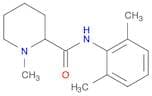
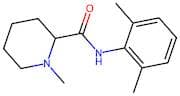
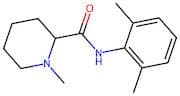
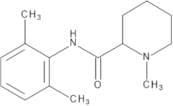
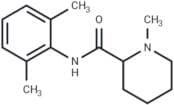
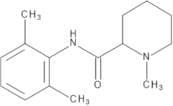
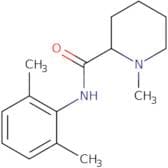
Mepivacaine is a local anesthetic belonging to the amide class, primarily used for its analgesic properties in medical and dental procedures. It is characterized by its ability to block nerve conduction by inhibiting sodium ion influx through voltage-gated sodium channels, thereby preventing the initiation and propagation of nerve impulses. Mepivacaine is typically administered via injection and is known for its relatively rapid onset of action and moderate duration of effect compared to other local anesthetics. Its chemical structure includes a piperidine ring, which contributes to its lipophilicity, enhancing its potency and effectiveness. Mepivacaine is less vasodilatory than some other local anesthetics, which can lead to a reduced need for vasoconstrictors in formulations. It is generally well-tolerated, though potential side effects may include local irritation, allergic reactions, or systemic toxicity if administered improperly. The substance is classified under the CAS number 96-88-8, and its use is regulated in many countries due to its pharmacological effects.
Formula:C15H22N2O
InChI:InChI=1S/C15H22N2O/c1-11-7-6-8-12(2)14(11)16-15(18)13-9-4-5-10-17(13)3/h6-8,13H,4-5,9-10H2,1-3H3,(H,16,18)
InChI key:InChIKey=INWLQCZOYSRPNW-UHFFFAOYSA-N
SMILES:N(C(=O)C1N(C)CCCC1)C2=C(C)C=CC=C2C
Synonyms:- (.+-.)-Mepivacaine
- 1-Methyl-2',6'-pipecoloxylidide
- 1-Methyl-2′,6′-pipecoloxylidide
- 2',6'-Pipecoloxylidide, 1-methyl-
- 2′,6′-Pipecoloxylidide, 1-methyl-
- <span class="text-smallcaps">DL</span>-Mepivacaine
- Apf 135
- Carbocain
- Carbocaine
- Carbocaine-V
- DL-Mepivacaine
- DL-N-methylpipecolinate-2, 6-dimethylanilide
- MepiSV
- Mepicaine
- N-(2,6-Dimethylphenyl)-1-methyl-2-piperidinecarboxamide
- N-(2,6-Dimethylphenyl)-1-methylpiperidin-2-carboxamid
- N-(2,6-Dimethylphenyl)-1-methylpiperidine-2-carboxamide
- N-(2,6-dimetilfenil)-1-metilpiperidina-2-carboxamida
- Scandicain
- Scandicaine
- Tevacaine
- See more synonyms
Sort by
Purity (%)
0
100
|
0
|
50
|
90
|
95
|
100
Found 11 products.
2-Piperidinecarboxamide, N-(2,6-dimethylphenyl)-1-methyl-
CAS:Formula:C15H22N2OPurity:97%Color and Shape:SolidMolecular weight:246.3480N-(2,6-Dimethylphenyl)-1-Methylpiperidine-2-Carboxamide
CAS:N-(2,6-Dimethylphenyl)-1-Methylpiperidine-2-CarboxamidePurity:97%Molecular weight:246.35g/molMepivacaine
CAS:Mepivacaine (Carbocaine) is an amide local anesthetic, blocking sodium channels for nerve blocks and epidurals.Formula:C15H22N2OPurity:99.86%Color and Shape:SolidMolecular weight:246.35Mepivacaine
CAS:Controlled ProductApplications Mepivacaine can be used in biological study of 2-adamantanamine produces prolonged spinal block in rats.
References Chen, Y., et al.: Neurosci Lett, 653, 168 (2017)Formula:C15H22N2OColor and Shape:NeatMolecular weight:246.35N-(2,6-Dimethylphenyl)-1-methylpiperidine-2-carboxamide
CAS:Formula:C15H22N2OPurity:95.0%Color and Shape:SolidMolecular weight:246.354Mepicaine
CAS:Controlled ProductMepicaine is a local anesthetic that is used to provide epidural anesthesia. It has high energy efficiency and can be used for prolonged periods of time. Mepicaine is also an effective anesthetic agent with a long duration of action. Mepicaine has been shown to have the ability to stop phosphodiesterase activity in the nervous system, which may cause it to be more effective than other anesthetics at blocking pain impulses. In addition, mepivacaine and procaine are two related local anesthetics derived from mepicycline, which are both chemically similar to mepincaine. Mepivicaine can cause allergic reactions, although they are rare and generally mild. This drug also has adrenergic receptor agonist properties, which means that it stimulates receptors that affect the sympathetic nervous system. An example of this would be adrenaline or noradrenaline production in the body. Acute toxicities of mepivicaine include dizzinessFormula:C15H22N2OPurity:Min. 95%Color and Shape:White PowderMolecular weight:246.35 g/mol