CAS 96426-21-0
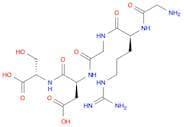
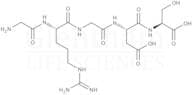
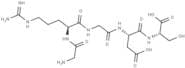
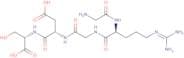
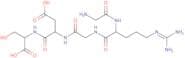
:gly-arg-gly-asp-ser
- H-Gly-Arg-Gly-Asp-Ser-OH
- glycyl-N~5~-(diaminomethylidene)-L-ornithylglycyl-L-alpha-aspartyl-L-serine
H-Gly-Arg-Gly-Asp-Ser-OH
CAS:GRGDS, a fragment derived from the cell binding region of fibronectin. Inhibitor of thrombin-induced platelet aggregation.Formula:C17H30N8O9Purity:96.7%Color and Shape:White LyophilisateMolecular weight:490.47Gly-Arg-Gly-Asp-Ser
CAS:Gly-Arg-Gly-Asp-Ser (GRGDS) GRGDS is a cell binding protein domain derived from the cell-binding region of fibronectin.Formula:C17H30N8O9Purity:98%Color and Shape:SolidMolecular weight:490.47H-Gly-Arg-Gly-Asp-Ser-OH TFA salt
CAS:H-Gly-Arg-Gly-Asp-Ser-OH TFA salt is a synthetic peptide that is designed to bind to the nuclear factor kappa B (NFκB) and inhibit its activation. NFκB is a transcription factor that regulates gene expression in response to various stimuli, including proinflammatory cytokines, oxidants, and electrophilic compounds. H-Gly-Arg-Gly-Asp-Ser-OH TFA salt has been shown to inhibit NFκB activation in a model system. This molecule also inhibits axonal growth and pluripotent cells differentiation, which may be due to its suppression of the signal peptide. The rate constant for this drug has been measured using polymer compositions and biocompatible polymers.Formula:C17H30N8O9(freebase)Purity:Min. 95%Molecular weight:490.47 g/molFibronectin Active Fragment (GRGDS)
CAS:Fibronectin is an extracellular matrix protein that plays a critical role in cell adhesion, migration, and differentiation. Fibronectin subunits are composed of repeating units of three types of modules: type I, type II, and type III. The active fragment of fibronectin refers to a small peptide sequence within the type III modules of fibronectin that has been shown to have potent biological activity.
The fibronectin active fragment, also known as the cell-binding domain or RGD domain, is a short peptide sequence consisting of the amino acid sequence Arg-Gly-Asp (RGD). This peptide sequence interacts with cell surface receptors known as integrins, which are important for mediating cell adhesion, migration, and signaling.
The fibronectin active fragment has been extensively studied as a research tool to investigate the mechanisms of cell adhesion and migration. It has also been used in tissue engineering applications to promote cell attachment and proliferation on synthetic biomaterials.Formula:C17H30N8O9CH3COOHH2OPurity:Min. 95%Molecular weight:490.47 g/molFibronectin Active Fragment (GRGDS)
CAS:Fibronectin is an extracellular matrix protein that plays a critical role in cell adhesion, migration, and differentiation. Fibronectin subunits are composed of repeating units of three types of modules: type I, type II, and type III. The active fragment of fibronectin refers to a small peptide sequence within the type III modules of fibronectin that has been shown to have potent biological activity.
The fibronectin active fragment, also known as the cell-binding domain or RGD domain, is a short peptide sequence consisting of the amino acid sequence Arg-Gly-Asp (RGD). This peptide sequence interacts with cell surface receptors known as integrins, which are important for mediating cell adhesion, migration, and signaling.
The fibronectin active fragment has been extensively studied as a research tool to investigate the mechanisms of cell adhesion and migration. It has also been used in tissue engineering applications to promote cell attachment and proliferation on synthetic biomaterials. This product is available as a 0.5mg vial.Formula:C17H30N8O9Purity:Min. 95%Molecular weight:490.47 g/mol