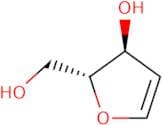
CAS 96761-00-1
:1,4-anhydro-2-deoxy-D-erythro-pent-1-enitol
Description:
1,4-Anhydro-2-deoxy-D-erythro-pent-1-enitol, with the CAS number 96761-00-1, is a carbohydrate derivative characterized by its unique structural features. This compound is an anhydro sugar, meaning it lacks a hydroxyl group typically found in sugars, which contributes to its stability and reactivity. It contains a pentose backbone, specifically a five-carbon structure, and features a double bond, which can influence its chemical behavior and interactions. The "D-erythro" designation indicates the specific stereochemistry of the molecule, which is crucial for its biological activity and recognition by enzymes. This compound may exhibit properties typical of sugars, such as solubility in water and potential participation in biochemical pathways. Its anhydro form suggests it may have applications in synthetic chemistry or as a building block in the development of pharmaceuticals or other bioactive compounds. Overall, the unique characteristics of 1,4-anhydro-2-deoxy-D-erythro-pent-1-enitol make it a subject of interest in both organic chemistry and biochemistry.
Formula:C5H8O3
InChI:InChI=1/C5H8O3/c6-3-5-4(7)1-2-8-5/h1-2,4-7H,3H2/t4-,5+/m0/s1
Synonyms:- 2-Furanmethanol, 2,3-dihydro-3-hydroxy-, (2R-trans)-
- D-erythro-pent-1-enitol, 1,4-anhydro-2-deoxy-
Sort by
Purity (%)
0
100
|
0
|
50
|
90
|
95
|
100
Found 4 products.
D-Ribal
CAS:D-Ribal is a drug that inhibits the growth of tumor cells by binding to epidermal growth factor receptor (EGFR), which is found on the surface of most cells in the body. This binding prevents EGFR from binding to epidermal growth factor, which is needed for cell division and proliferation. The effect of D-Ribal can be enhanced if used in combination with other drugs that inhibit EGFR signaling pathways. D-Ribal has been shown to be effective against urothelial carcinoma and bladder cancer, but not against primary tumors such as breast cancer or prostate cancer.Formula:C5H8O3Purity:Min. 95%Molecular weight:116.12 g/mol