CAS 97281-44-2
:Phosphatidylcholines, egg
Description:
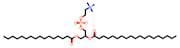
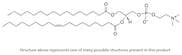
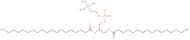
Phosphatidylcholines, commonly derived from egg yolk, are a class of phospholipids that play a crucial role in cellular structure and function. The substance identified by the CAS number 97281-44-2 is characterized by its amphiphilic nature, possessing both hydrophilic (water-attracting) and hydrophobic (water-repelling) properties, which makes it essential for forming biological membranes. Phosphatidylcholines are composed of a glycerol backbone, two fatty acid chains, a phosphate group, and a choline molecule. They are known for their ability to form lipid bilayers, which are fundamental to cell membrane integrity and fluidity. Additionally, phosphatidylcholines serve as important signaling molecules and are involved in various metabolic processes. They are also utilized in food, pharmaceutical, and cosmetic industries due to their emulsifying properties. Overall, phosphatidylcholines from egg yolk are significant for both biological functions and industrial applications, highlighting their versatility and importance in various fields.
Formula:Unspecified
Synonyms:- Phosphatidylcholines, egg
Sort by
Purity (%)
0
100
|
0
|
50
|
90
|
95
|
100
Found 6 products.
Phosphatidylcholine
CAS:Lecithins and other phosphoaminolipids, nesoiFormula:C8H18NO6P(R)(RColor and Shape:White Off-White PowderMolecular weight:770.12Phosphatidylcholines,egg
CAS:Formula:C43H86NO8PPurity:99%Color and Shape:SolidMolecular weight:776.1186Phosphatidylcholines
CAS:Phosphatidylcholines are a class of compounds that consist of a glycerol backbone with two fatty acids esterified to the hydroxyl groups. They have a phase transition temperature between 18 and 34 degrees Celsius. Phosphatidylcholines are naturally occurring in biological systems and can be extracted from eggs, soybeans, and other sources. Monoclonal antibodies can be used to detect the presence of phosphatidylcholines in tumor cells. This technique is more sensitive than other methods such as immunohistochemistry or immunofluorescence. The phosphatidylcholine-binding site on the monoclonal antibody is composed of three amino acid residues: serine, lysine, and arginine. These amino acids form an alpha helix structure that interacts with the hydrophobic region of phosphatidylcholine molecules by hydrogen bonding. The monoclonal antibody binds to the surface of tumor cells,Purity:Min. 95%