Amino Acid Derivatives
Amino acid derivatives are compounds that are structurally related to amino acids but have been chemically modified to introduce new functional groups or alter their properties. These derivatives are widely used in peptide synthesis, drug development, and biochemical research. At CymitQuimica, we offer a broad range of high-quality amino acid derivatives to support your research and industrial applications, ensuring precise and effective results in your experiments and synthesis projects.
Found 3955 products of "Amino Acid Derivatives"
Sort by
Purity (%)
0
100
|
0
|
50
|
90
|
95
|
100
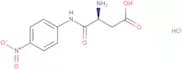
H-Asp-pNA·HCl
CAS:<p>H-Asp-pNA·HCl is a versatile building block that can be used in the synthesis of complex compounds. It has been shown to be useful in the synthesis of reagents and speciality chemicals, as well as being a reaction component for the synthesis of pharmaceuticals. H-Asp-pNA·HCl is also a useful scaffold for the production of high quality and highly pure products.</p>Formula:C10H11N3O5·HClPurity:Min. 95%Color and Shape:SolidMolecular weight:289.67 g/molBoc-Asp-Gly-Oet
CAS:<p>Boc-Asp-Gly-Oet is a versatile building block that is used in the synthesis of complex compounds. It is also a useful reagent, speciality chemical, and reaction component. Boc-Asp-Gly-Oet can be used as an intermediate for the synthesis of other compounds or as a scaffold for drug design. This compound has high purity and quality, making it a useful building block for research and development.</p>Formula:C13H22N2O7Purity:Min. 95%Color and Shape:PowderMolecular weight:318.32 g/molFmoc-L-Gln-OH
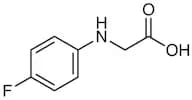
CAS:<p>Fmoc-L-Gln-OH is a vasoactive intestinal peptide (VIP) analog that has been shown to be a potent pressor agent. It binds to and activates the VIP receptors in the vascular endothelium, causing vasoconstriction of blood vessels. Fmoc-L-Gln-OH also inhibits mitochondrial superoxide production and colorectal adenocarcinoma growth in vitro. This compound can be synthesized using solid phase chemistry, which is a technique where the building blocks are attached sequentially to an insoluble support material. This process can be activated by trifluoroacetic acid or other activating agents and eliminates the need for protecting groups.<br>Fmoc-L-Gln-OH has been shown to inhibit the uptake of iron from transferrin into cells and to bind hippuric acid as well as many other organic compounds.</p>Formula:C20H20N2O5Purity:Min. 95%Color and Shape:PowderMolecular weight:368.38 g/molN-(4-Fluorophenyl)glycine
CAS:Formula:C8H8FNO2Purity:>98.0%(GC)(T)Color and Shape:White to Light yellow powder to crystalMolecular weight:169.16L-Valine b-naphthylamide
CAS:<p>H-Val-bNA</p>Formula:C15H18N2OPurity:Min. 99 Area-%Molecular weight:242.32 g/molPro-Gly-OH
CAS:<p>Pro-Gly-OH is a cyclic peptide that has been shown to have antimicrobial activity. Pro-Gly-OH has been shown to be an intramolecular hydrogen acceptor, which leads to the formation of a carbonyl group. This compound also has site specific interactions with the cell membrane and is taken up by cells. It is active at acidic pHs and can be activated by growth factors.<br>The conformational properties of Pro-Gly-OH are due to hydrogen bonding interactions and amide bond formation.</p>Formula:C7H12N2O3Purity:Min. 95%Color and Shape:PowderMolecular weight:172.18 g/mol(R)-(-)-2-Phenylglycinol
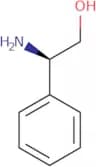
CAS:<p>(R)-(-)-2-Phenylglycinol is an enantiopure chiral compound that has been used in the synthesis of polymers. This polymerase chain reaction (PCR) inhibitor binds to the α subunit of DNA polymerase, preventing replication and transcription. The binding site for this inhibitor is located at the active site of the enzyme and is a hydroxyl group. The (S)-enantiomer of 2-phenylglycinol does not bind to the α subunit, so it can be used as a control in experiments. 2-Phenylglycinol is also known to have antiviral properties against HIV infection.</p>Formula:C8H11NOPurity:Min. 97.5 Area-%Color and Shape:White PowderMolecular weight:137.18 g/mol3-Amino-2-naphthoic Acid
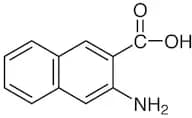
CAS:Formula:C11H9NO2Purity:>97.0%(T)Color and Shape:Light yellow to Amber to Dark green powder to crystalMolecular weight:187.20N-Carbamoyl-DL-aspartic Acid
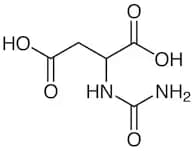
CAS:Formula:C5H8N2O5Purity:>98.0%(T)Color and Shape:White to Almost white powder to crystalMolecular weight:176.13D-Alanine methyl ester HCl
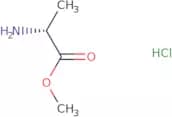
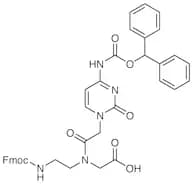
CAS:<p>D-Alanine methyl ester HCl is a diamide with antimycobacterial activity. It was synthesized by the reaction of D-alanine and methyl acrylate in the presence of methanesulfonic acid. The chiral compound was obtained as a racemic mixture. Optical properties are not reported.</p>Formula:C4H9NO2HCIPurity:Min. 95%Color and Shape:White To Off-White SolidMolecular weight:243.04 g/molFmoc-PNA-C(Bhoc)-OH
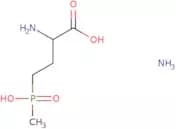
CAS:Formula:C39H35N5O8Purity:>98.0%(HPLC)(qNMR)Color and Shape:White to Light yellow powder to crystalMolecular weight:701.74DL-Phosphinothricin ammonium salt
CAS:<p>Non-proteinogenic amino acid; Inhibitor of glutamine synthetase</p>Formula:C5H15N2O4PPurity:Min. 95 Area-%Color and Shape:White PowderMolecular weight:198.16 g/molNα-[(9H-Fluoren-9-ylmethoxy)carbonyl]-N1-tert-butoxycarbonyl-L-tryptophan
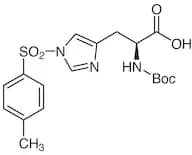
CAS:Formula:C31H30N2O6Purity:>97.0%(HPLC)Color and Shape:White to Orange to Green powder to crystalMolecular weight:526.59Nα-(tert-Butoxycarbonyl)-τ-(p-toluenesulfonyl)-L-histidine
CAS:Formula:C18H23N3O6SPurity:>98.0%(T)Color and Shape:White to Almost white powder to crystalMolecular weight:409.46DL-Homocysteine
CAS:<p>DL-Homocysteine is a sulfur-containing amino acid that is essential for the synthesis of methionine, and is an intermediate in the metabolism of L-methionine. DL-homocysteine has been shown to cause cardiac infarction in rats by inhibiting mitochondrial functions. This amino acid also inhibits the activity of enzymes that regulate homocysteine levels, such as cystathione beta-synthase and cystathione gamma-lyase. DL-homocysteine can be used as a fluorescent probe for detecting proteins involved in apoptosis. It also has proapoptotic effects on cells, causing them to undergo apoptosis.</p>Formula:C4H9NO2SPurity:Min. 95%Color and Shape:PowderMolecular weight:135.19 g/molβ-Cyano-L-alanine
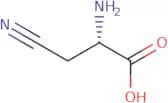
CAS:<p>Beta-cyano-l-alanine is a naturally occurring amino acid that is found in plants. It is synthesized by the enzyme beta-cyanoalanine synthase and is involved in plant metabolism. Beta-cyano-l-alanine is a precursor of the neurotransmitter gamma aminobutyric acid, or GABA, which has been shown to regulate the opening and closing of calcium channels in brain cells. In addition, it has been shown to inhibit enzymes such as phosphofructokinase and pyruvate kinase that are involved in the breakdown of glucose and other nutrients. Beta-cyano-l-alanine has also been shown to inhibit ryanodine receptors and other enzymes involved in muscle contraction. This amino acid can be used as an indicator for tissue culture experiments because it can be detected by sephadex G-100 chromatography.</p>Formula:C4H6N2O2Purity:Min. 95%Color and Shape:White PowderMolecular weight:114.1 g/molBoc-homo-L-tyrosine
CAS:<p>Boc-homo-L-tyrosine is a high quality reagent, which is a useful intermediate for the synthesis of complex compounds. It is also a useful scaffold that can be used in the creation of fine chemicals and research chemicals. Boc-homo-L-tyrosine has been shown to be versatile, as it can serve as a reaction component in different types of chemical reactions. This compound can be used as a building block and is classified as a speciality chemical. Boc-homo-L-tyrosine has an CAS number of 198473-94-8.</p>Formula:C15H21NO5Purity:Min. 95%Color and Shape:White PowderMolecular weight:295.33 g/molFmoc-Ala-Pro-Pro-OH
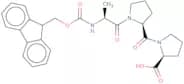
CAS:<p>Fmoc-Ala-Pro-Pro-OH is an amino acid that belongs to the class of speciality chemicals. It is a versatile building block for organic synthesis, with applications in pharmaceuticals, agrochemicals, and other chemical industries. The CAS number for Fmoc-Ala-Pro-Pro-OH is 386768-25-8.</p>Formula:C28H31N3O6Purity:Min. 95%Color and Shape:PowderMolecular weight:505.56 g/molZ-O-tert-Butyl-L-tyrosine
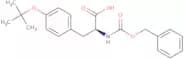
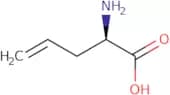
CAS:<p>Z-O-tert-Butyl-L-tyrosine is a fine chemical that is soluble in water and has a wide range of uses. It is a versatile scaffold for the synthesis of complex compounds, and can be used as a building block or reaction component in research chemicals. Z-O-tert-Butyl-L-tyrosine is an important reagent for organic synthesis, especially when combined with other chemicals. This chemical can also be used as a speciality chemical to produce high quality products.</p>Formula:C21H25NO5Purity:Min. 95%Color and Shape:White PowderMolecular weight:371.43 g/molD-Allylglycine
CAS:<p>D-Allylglycine is a l-amino acid with the chemical formula of CH2CH(CH3)COOH. D-Allylglycine binds to the N-methyl-D-aspartate (NMDA) receptor and has been shown in animal studies to have effects on blood pressure, although its clinical relevance remains unclear. It is an enantiopure compound and can be obtained as a trifluoroacetate salt or ethyl diazoacetate ester hydrochloride. D-Allylglycine is also an aminoglycoside and ester hydrochloride that can be used for the treatment of bacterial infections. The amino group in D-allylglycine binds to glutamate receptors, which are found on neurons, and inhibits the release of gamma-aminobutyric acid (GABA). This drug may also have potential as a serotonergic agent due to its ability to inhibit serotonin re</p>Formula:C5H9NO2Purity:Min. 95%Color and Shape:White PowderMolecular weight:115.13 g/mol





![Nα-[(9H-Fluoren-9-ylmethoxy)carbonyl]-N1-tert-butoxycarbonyl-L-tryptophan](/_next/image/?url=https%3A%2Fstatic.cymitquimica.com%2Fproducts%2F3B%2Fthumb-webp%2FF0507.webp&w=3840&q=75)