Amino Acid Derivatives
Amino acid derivatives are compounds that are structurally related to amino acids but have been chemically modified to introduce new functional groups or alter their properties. These derivatives are widely used in peptide synthesis, drug development, and biochemical research. At CymitQuimica, we offer a broad range of high-quality amino acid derivatives to support your research and industrial applications, ensuring precise and effective results in your experiments and synthesis projects.
Found 3955 products of "Amino Acid Derivatives"
Sort by
Purity (%)
0
100
|
0
|
50
|
90
|
95
|
100
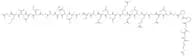
Biotinyl-CRF (human, rat)
CAS:<p>Please enquire for more information about Biotinyl-CRF (human, rat) including the price, delivery time and more detailed product information at the technical inquiry form on this page</p>Formula:C218H358N62O65S3Purity:Min. 95%Molecular weight:4,983.75 g/molZ-Pro-Hyp-OH
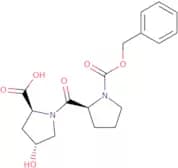
CAS:<p>Z-Pro-Hyp-OH is a synthetic, non-natural amino acid. It has been shown to be a stable and efficient reagent for the synthesis of collagen, which is a major protein in connective tissue. The compound was discovered by fractionating the natural amino acid Z-Pro-Hyp-OH and showing that it had optical activity. The molecular weight of this compound has been determined to be 2,936.7 Daltons. This molecule has also been shown to have high dichroism spectra and is capable of stabilizing collagen in vitro.</p>Formula:C18H22N2O6Purity:Min. 95%Molecular weight:362.38 g/molH-D-ASN-L-ASP-OH
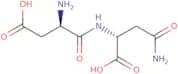
<p>Please enquire for more information about H-D-ASN-L-ASP-OH including the price, delivery time and more detailed product information at the technical inquiry form on this page</p>Purity:Min. 95%Color and Shape:PowderL-Glutamic acid 5-benzyl ester
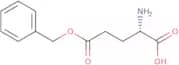
CAS:<p>L-Glutamic acid 5-benzyl ester is an amino acid that has been synthesized to have a lysine residue. It is an ester hydrochloride and has been shown to have broad-spectrum antimicrobial properties. L-glutamic acid 5-benzyl ester's antimicrobial activity is thought to be due to its chemical structure which allows it to act as an antimicrobial peptide, binding to receptors on the surface of bacterial cells and inhibiting their growth. L-glutamic acid 5-benzyl ester also inhibits osteogenic genes in cervical cancer cells, but not in normal cells.</p>Formula:C12H15NO4Purity:Min. 95%Color and Shape:White Off-White PowderMolecular weight:237.25 g/molH-Lys-Trp-Lys-OH TFA salt
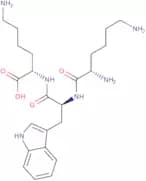
CAS:<p>H-Lys-Trp-Lys-OH TFA salt is a peptide that binds to DNA and enhances the repair of damaged DNA. It interacts with lysine residues on the DNA strand, which are known to be involved in DNA repair mechanisms. H-Lys-Trp-Lys-OH TFA salt also has some optical properties, as it can bind to tryptophan residues in the fluorescing region of damaged DNA. This peptide was originally designed for use as a fluorescent probe for damaged DNA in living cells, but has since been found to have therapeutic effects on damaged cells.</p>Formula:C23H36N6O4Purity:Min. 95%Molecular weight:460.57 g/molLauroyl lysine
CAS:<p>Lauroyl lysine (N6-Lauroyl-L-lysine) functions as skin and hair conditioning agents and as surfactants-cleansing agents in personal care products.</p>Formula:C18H36N2O3Purity:99.18%Color and Shape:White To Off-White Solid With Characteristic Faint OdorMolecular weight:328.495-TAMRA-Amyloid β-Protein (1-40) trifluoroacetate salt
CAS:<p>Please enquire for more information about 5-TAMRA-Amyloid beta-Protein (1-40) trifluoroacetate salt including the price, delivery time and more detailed product information at the technical inquiry form on this page</p>Formula:C219H315N55O62SPurity:Min. 95%Molecular weight:4,742.24 g/molH-Arg-OtBu hydrochloride salt
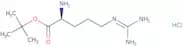
CAS:<p>Please enquire for more information about H-Arg-OtBu hydrochloride salt including the price, delivery time and more detailed product information at the technical inquiry form on this page</p>Formula:C10H22N4O2Purity:Min. 95%Molecular weight:230.31 g/molFmoc-Lys-OH·HCl
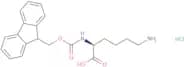
CAS:<p>Fmoc-Lys-OH·HCl is an acidic pyrylium that has been shown to be a potent inhibitor of tumor vasculature. It binds to the human serum albumin and inhibits the binding of ligands to the receptor tyrosine kinases, which are involved in brain tumor proliferation. Fmoc-Lys-OH·HCl has also been shown to inhibit the growth of cancer cells by binding to cell membrane receptors and inhibiting protein synthesis. This compound is also isomeric, meaning it can exist in different forms with different properties.</p>Formula:C21H24N2O4·HClPurity:Min. 95 Area-%Color and Shape:White PowderMolecular weight:404.89 g/molBiotinyl-VIP (human, mouse, rat) trifluoroacetate salt
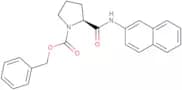
CAS:<p>Please enquire for more information about Biotinyl-VIP (human, mouse, rat) trifluoroacetate salt including the price, delivery time and more detailed product information at the technical inquiry form on this page</p>Formula:C157H252N46O44S2Purity:Min. 95%Molecular weight:3,552.1 g/molZ-Pro-bNA
CAS:<p>Please enquire for more information about Z-Pro-bNA including the price, delivery time and more detailed product information at the technical inquiry form on this page</p>Formula:C23H22N2O3Purity:Min. 95%Molecular weight:374.43 g/molHypocretin (70-98) (human)
CAS:<p>Please enquire for more information about Hypocretin (70-98) (human) including the price, delivery time and more detailed product information at the technical inquiry form on this page</p>Formula:C125H214N44O37SPurity:Min. 95%Molecular weight:2,957.38 g/molFmoc-N-methylglycine
CAS:<p>Fmoc-N-methylglycine is a modified form of the amino acid glycine, which has been modified to include a reactive group that can be used to link other molecules. This molecule has gram-negative bacterial activity and exhibits potent antibacterial activity against many gram-positive bacteria. Fmoc-N-methylglycine is also an antimicrobial peptide with binding constants in the nanomolar range. It is also an agent that binds to serotonin, which may explain its effects on mood and sleep. Fmoc-N-methylglycine can be synthesized using stepwise solid phase synthesis methods or by conjugation with other molecules.</p>Formula:C18H17NO4Purity:Min. 95%Molecular weight:311.33 g/molFmoc-b-Ala-Ala-Pro-OH
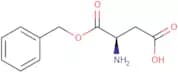
CAS:<p>Fmoc-b-Ala-Ala-Pro-OH is a reaction component that can be used in the synthesis of peptides and other compounds. It is a building block for the preparation of complex compounds, such as small molecules, polymers and natural products. Fmoc-b-Ala-Ala-Pro-OH has been shown to be useful in the synthesis of various types of reagents, including antibiotics and pharmaceuticals. This chemical has been reported as a useful scaffold for the preparation of high quality research chemicals. Fmoc-b-Ala-Ala-Pro is also an intermediate in the synthesis of speciality chemicals and fine chemicals.</p>Formula:C26H29N3O6Purity:Min. 95%Color and Shape:White PowderMolecular weight:479.53 g/molH-D-Asp-OBzl
CAS:<p>Please enquire for more information about H-D-Asp-OBzl including the price, delivery time and more detailed product information at the technical inquiry form on this page</p>Formula:C11H13NO4Purity:Min. 95%Molecular weight:223.23 g/molH-Lys(Boc)-OH
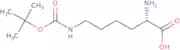
CAS:<p>H-Lys(Boc)-OH is an ε-amino-protected lysine that plays a pivotal role in solution phase peptide synthesis. Strategically protected at the ε-amino group, it allows controlled peptide assembly, and it serves as intermediate for synthesizing β-peptides. The bulky Boc (tert-butyloxycarbonyl) group shields its epsilon amine (NH2) group, acting as a protective measure to prevent unwanted side reactions.</p>Formula:C11H22N2O4Color and Shape:White PowderMolecular weight:246.3 g/molN-Boc-glycine
CAS:<p>N-Boc-glycine is a chemical compound used in the synthesis of cyclic peptides. N-Boc-glycine is synthesized by the reaction of glycine with methanol and hydrochloric acid in the presence of an activated form of carbon monoxide. The pharmacokinetic properties of N-Boc-glycine are similar to those for human immunoglobulin, and it can be used as a reference compound for preparative high performance liquid chromatography (HPLC). It has been shown that the nitrogen atoms in N-Boc-glycine are chemically stable, which makes it suitable for asymmetric synthesis. N-Boc-glycine also has potent antagonist effects on biochemical properties such as calcium channel blockade, inhibition of platelet aggregation, and inhibition of neutrophil chemotaxis.</p>Formula:C7H13NO4Purity:Min. 95%Color and Shape:White PowderMolecular weight:175.18 g/molN-(3-Amino-2-hydroxy-3-oxopropyl)-L-valyl-N-phenyl-L-leucinamide
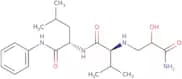
CAS:<p>Please enquire for more information about N-(3-Amino-2-hydroxy-3-oxopropyl)-L-valyl-N-phenyl-L-leucinamide including the price, delivery time and more detailed product information at the technical inquiry form on this page</p>Formula:C20H32N4O4Purity:Min. 95%Color and Shape:PowderMolecular weight:392.49 g/molFmoc-α-methyl-L-phenylalanine
CAS:<p>Please enquire for more information about Fmoc-α-methyl-L-phenylalanine including the price, delivery time and more detailed product information at the technical inquiry form on this page</p>Formula:C25H23NO4Purity:Min. 95%Color and Shape:PowderMolecular weight:401.45 g/molH-Ala-Ala-bNA
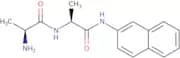
CAS:<p>Ala-Ala-bNA is a substrate for dipeptidyl aminopeptidase I (cathepsin C)</p>Formula:C16H19N3O2Purity:Min. 99 Area-%Color and Shape:White PowderMolecular weight:285.34 g/mol