Amino Acid Derivatives
Found 4012 products of "Amino Acid Derivatives"
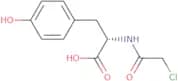
N-Chloroacetyl-L-tyrosine
CAS:N-Chloroacetyl-L-tyrosine is a synthetic, proteolytic enzyme that hydrolyzes proteins containing the amino acid L-tyrosine. It has been shown to inhibit the growth of bacteria by inhibiting the activity of enzymes involved with protein synthesis and peptide bond formation. N-Chloroacetyl-L-tyrosine inhibits the activity of diazonium salt and conjugates, which are involved in polypeptide synthesis and DNA replication. It also has an inhibitory effect on functional groups, such as hydroxyl, amine, sulfhydryl, carboxylate, phosphate, and phosphoric acid.
Purity:Min. 95%Molecular weight:257.67 g/molL-Histidine hydrochloride solution
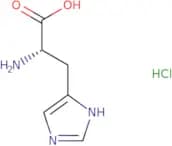
CAS:L-Histidine hydrochloride solution is a chemical that is used as a nutrient in the treatment of bowel disease. It can be used to treat leukemia, autoimmune diseases, and bowel disease. L-histidine hydrochloride solution contains sodium citrate, which is an essential ingredient for the formation of blood clots. This chemical also has been shown to inhibit group P2 enzymes that are responsible for the degradation of heparin. L-histidine hydrochloride solution may have anti-inflammatory effects due to its ability to inhibit neutrophil chemotaxis and leukocyte adhesion, which are both important factors in inflammation.Formula:C6H9N3O2·HClPurity:Min. 95%Molecular weight:191.62 g/molCreatine phosphate di(tris) salt
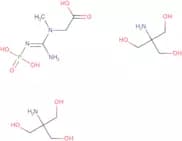
CAS:Creatine phosphate di(tris) salt is a cyclase and rectifier of potassium ion channels. It is a potent activator of calcium ion channels, expressed in the cells of the ng108-15 mouse neuroblastoma line. Creatine phosphate di(tris) salt also potently activates guanylate cyclase and l-type calcium ion channels. This drug has been shown to stimulate prostaglandin synthesis and inhibit the production of prostaglandin E1 in biological chemistry studies. Creatine phosphate di(tris) salt is a cyclase and rectifier of potassium ion channels. It is a potent activator of calcium ion channels, expressed in the cells of the ng108-15 mouse neuroblastoma line. Creatine phosphate di(tris) salt also potently activates guanylate cyclase and l-type calcium ion channels. This drug has been shown to stimulate prostaglandin synthesis and inhibit the production of prostaglandin E1 inFormula:C12H32N5O11PPurity:Min. 95%Color and Shape:PowderMolecular weight:453.38 g/molD-Alanine
CAS:D-Alanine is a versatile building block that can be used as a reagent or speciality chemical in research. It is also an important intermediate for the production of other chemicals and useful scaffold for drug design. D-Alanine (CAS No. 338-69-2) is a high quality, fine chemical that can be used as a reaction component to synthesize many complex compounds. D-Alanine is also an important intermediate for the production of other chemicals and useful scaffold for drug design.
Formula:C3H7NO2Purity:Min. 98 Area-%Molecular weight:89.09 g/molRef: 3D-A-4200
-Unit-ggTo inquire1kgTo inquire5kgTo inquire10kgTo inquire500gTo inquire2500gTo inquireN-Acetylglycine
CAS:N-Acetylglycine is a versatile building block for the synthesis of complex organic compounds. It is used as a reagent in research, as an intermediate in chemical reactions, or as a speciality chemical. N-Acetylglycine has been found to be useful as a building block in organic synthesis and can be reacted with other chemicals to form new compounds. N-Acetylglycine has also been shown to have anti-inflammatory properties and is used as an analgesic for pain relief.
Formula:C4H7NO3Molecular weight:117.11 g/molDL-2-Aminoadipic acid
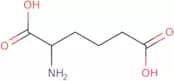
CAS:DL-2-Aminoadipic acid is a metabolite of the amino acid lysine, which is found in many protein-containing foods. It is also synthesized from glutamate, which is an excitatory neurotransmitter and a major regulator of neuronal function. This compound has been shown to have potential as a biomarker for metabolic disorders. DL-2-Aminoadipic acid has been shown to bind to penicillin-binding proteins (PBPs) in the bacterial cell wall and disrupt its formation, leading to the inhibition of peptidoglycan synthesis. DL-2-Aminoadipic acid may also be involved in regulating gamma-aminobutyric acid (GABA), an inhibitory neurotransmitter that inhibits the release of excitatory neurotransmitters. DL-2-Aminoadipic acid has also been shown to inhibit HIV infection by binding to lysine residues on the virus envelope protein gp120.Formula:C6H11NO4Purity:Min. 95%Color and Shape:White PowderMolecular weight:161.16 g/molD-Tryptophan
CAS:D-Tryptophan is a versatile building block that has many applications in the field of fine chemicals, research chemicals, and speciality chemicals. D-Tryptophan is a useful building block for complex compounds and can be used as a reagent or reaction component. It is also a useful scaffold in organic synthesis.Formula:C11H12N2O2Purity:Min. 98.0 Area-%Molecular weight:204.23 g/molRef: 3D-T-8300
-Unit-kgkgTo inquire1kgTo inquire5kgTo inquire250gTo inquire500gTo inquire2500gTo inquireN2-Lauroyl-L-glutamine
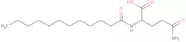
CAS:N2-Lauroyl-L-glutamine is a surfactant that is used in skin care products. It is an amphiphilic molecule that has a hydrophilic head and lipophilic tail, which allows it to form micelles. This surfactant can be found as either the L or D isomer, which are mirror images of each other. The L form is more soluble and less hygroscopic than the D form. N2-Lauroyl-L-glutamine also contains fatty acids, polycarboxylic acid, and monomers. In addition to being used in skin care products, this surfactant can be found in cosmetics such as sunscreens and moisturizers. It also has a polymerization initiator function for silicone polymers and polyurethanes.
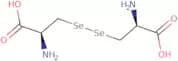
Formula:C17H32N2O4Purity:Min. 95%Color and Shape:White/Off-White SolidMolecular weight:328.45 g/molD-Selenocystine
CAS:Selenocystine is a non-protein amino acid that belongs to the group of selenoamino acids. Selenocystine is found in plants and microorganisms, where it plays a role in bacterial metabolism. Selenocystine can be synthesized by bacteria from D-glutamate, cysteine, and hydrogen sulfide. It has been shown to have synergistic effects with other compounds such as carbon sources, hydroxyl ions, and subunits. Selenocystine has been shown to inhibit the growth of certain strains of bacteria that are resistant to antibiotics such as penicillin or erythromycin. These effects are mediated through the mitochondrial membrane potential and may also be due to its ability to inhibit microbial respiration.
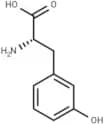
Formula:C6H12N2O4Se2Purity:Min. 95%Color and Shape:PowderMolecular weight:334.09 g/molL-m-Tyrosine
CAS:L-m-Tyrosine (3-Hydroxy-L-Phenylalanine) is a non-natural amino acid.Formula:C9H11NO3Purity:99.8%Color and Shape:SolidMolecular weight:181.19(+/-)-BOC-a-phosphonoglycine tri-methyl ester
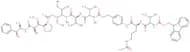
CAS:Reagent in the chemical synthesisFormula:C10H20NO7PPurity:Min. 95%Color and Shape:White PowderMolecular weight:297.24 g/molFmoc-Val-Cit-PAB-MMAE
CAS:Please enquire for more information about Fmoc-Val-Cit-PAB-MMAE including the price, delivery time and more detailed product information at the technical inquiry form on this page
Formula:C73H104N10O14Purity:Min. 95%Molecular weight:1,345.67 g/molFmoc-[D10]Leu-OH
CAS:Controlled ProductPlease enquire for more information about Fmoc-[D10]Leu-OH including the price, delivery time and more detailed product information at the technical inquiry form on this pageFormula:C21H13D10NO4Purity:Min. 95%Molecular weight:363.47 g/mol5-Methyl-L-norleucine
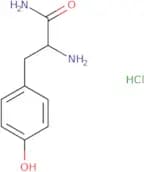
CAS:5-Methyl-L-norleucine is an amide that is a natriuretic and has been shown to have physiological activities. It has been shown to have restenosis and tumor treatment properties, as well as antimicrobial resistance. 5-Methyl-L-norleucine also acts as a cyclic peptide, which may be due to its disulfide bond. This compound is not only effective in treating microbial infections, but it also has anti-inflammatory properties. 5-Methyl-L-norleucine is found in the genus of plants called "Acorus," so it can be used for plant physiology research.Formula:C7H15NO2Purity:Min. 95%Color and Shape:White PowderMolecular weight:145.2 g/molH-D-Tyr-NH2·HCl
CAS:Versatile small molecule scaffoldFormula:C9H12N2O2Purity:Min. 95%Molecular weight:216.66 g/molL-Tyrosine
CAS:L-Tyrosine is a non-essential amino acid with versatile building block properties. It can be used as a reagent in organic synthesis, as a building block for complex compounds, and as a speciality chemical. L-Tyrosine is also useful as a reaction component in the synthesis of peptides and proteins. L-Tyrosine is an important intermediate in the production of pharmaceuticals, agrochemicals, dyes, flavors and fragrances. The CAS number for L-Tyrosine is 60-18-4.Formula:C9H11NO3Molecular weight:181.19 g/molFmoc-β-azidoalanine
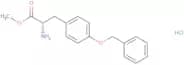
CAS:Fmoc-β-azidoalanine is a cyclic peptide that is synthesized by the Fmoc solid phase peptide synthesis method. It is used as a model for serine proteases, and its ability to bind to other molecules has been shown using molecular modelling and validation. Fmoc-β-azidoalanine has an acidic side chain that can form a disulfide bond with cysteine residues on proteins. This property allows it to be used in crystallography and chemical biology studies. The molecule can also be used in the study of human serum biomolecules.Formula:C18H16N4O4Purity:Min. 98 Area-%Color and Shape:PowderMolecular weight:352.34 g/molO-Benzyl-L-tyrosine methyl ester hydrochloride
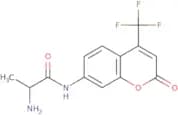
CAS:Please enquire for more information about O-Benzyl-L-tyrosine methyl ester hydrochloride including the price, delivery time and more detailed product information at the technical inquiry form on this pageFormula:C17H19NO3·HClPurity:Min. 95%Color and Shape:PowderMolecular weight:321.8 g/molH-Ala-AFC trifluoroacetate salt
CAS:Please enquire for more information about H-Ala-AFC trifluoroacetate salt including the price, delivery time and more detailed product information at the technical inquiry form on this pageFormula:C13H11F3N2O3Purity:Min. 95%Color and Shape:PowderMolecular weight:300.23 g/molMSPG
CAS:mGlu receptor antagonistFormula:C9H11NO5SPurity:98%Color and Shape:SolidMolecular weight:245.25






![Fmoc-[D10]Leu-OH](/_next/image/?url=https%3A%2Fstatic.cymitquimica.com%2Fproducts%2F3D%2Fthumb-webp%2FFF111392.webp&w=3840&q=75)