Fmoc Amino Acids
Fmoc-amino acids are amino acids protected with a 9-fluorenylmethoxycarbonyl (Fmoc) group, widely used in solid-phase peptide synthesis (SPPS). The Fmoc group is easily removable under mild conditions, making it ideal for iterative peptide synthesis. At CymitQuimica, we offer a comprehensive selection of high-quality Fmoc-amino acids to support your peptide synthesis and research needs, ensuring high purity and reliable performance in your synthetic processes.
Found 1710 products of "Fmoc Amino Acids"
Sort by
Purity (%)
0
100
|
0
|
50
|
90
|
95
|
100
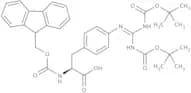
Fmoc-Phe(4-Boc2-guanidino)-OH
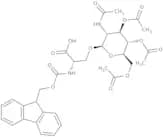
CAS:Formula:C35H40N4O8Purity:≥ 97.0%Color and Shape:White, off-white or pale beige powderMolecular weight:644.71Fmoc-Ser(β-D-GlcNAc(Ac)3)-OH
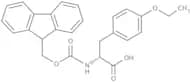
CAS:Formula:C32H36N2O13Purity:≥ 95.0%Color and Shape:White to off-white solidMolecular weight:656.63Fmoc-O-ethyl-D-tyrosine
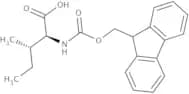
CAS:Formula:C26H25NO5Purity:≥ 98.0%Color and Shape:White or almost white powderMolecular weight:431.48Fmoc-D-Ile-OH
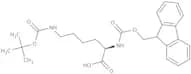
CAS:Formula:C21H23NO4Purity:≥ 98.0%Color and Shape:White to almost white powder or crystalsMolecular weight:353.41Fmoc-D-Lys(Boc)-OH
CAS:Formula:C26H32N2O6Purity:≥ 98.0%Color and Shape:White to almost white powder or crystalsMolecular weight:468.54Fmoc-N-(2-Boc-aminoethyl)-Gly-OH
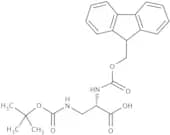
CAS:Formula:C24H28N2O6Purity:≥ 99.0% (HPLC)Color and Shape:White crystalline powderMolecular weight:440.49Fmoc-Dap(Boc)-OH
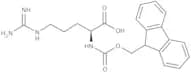
CAS:Formula:C23H26N2O6Purity:≥ 98.0%Color and Shape:White to off-white powderMolecular weight:426.47Fmoc-Arg-OH
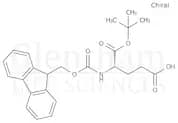
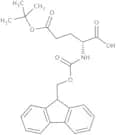
CAS:Formula:C21H24N4O4Purity:≥ 95.0%Color and Shape:White to off-white powder or crystalsMolecular weight:396.44Fmoc-Glu-OtBu
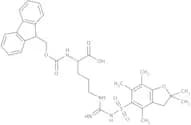
CAS:Formula:C24H27NO6Purity:≥ 98.0%Color and Shape:White to almost white powderMolecular weight:425.47Fmoc-D-Arg(Pbf)-OH
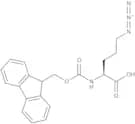
CAS:Formula:C34H40N4O7SPurity:≥ 98.0%Color and Shape:White to almost white powder or crystalsMolecular weight:648.77(S)-5-Azido-2-(Fmoc-amino)pentanoic acid
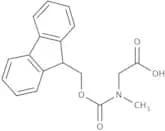
CAS:Formula:C20H20N4O4Purity:≥ 98.5%Color and Shape:White powderMolecular weight:380.40Fmoc-Sar-OH
CAS:Formula:C18H17NO4Purity:(Titration) ≥ 98.0%Color and Shape:White to almost white powderMolecular weight:311.33Fmoc-D-Glu(OtBu)-OH
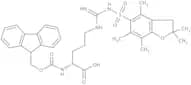
CAS:Formula:C24H27NO6Purity:≥ 98.0%Color and Shape:White to almost white powder or crystalsMolecular weight:425.47Fmoc-Arg(Pbf)-OH
CAS:Formula:C34H40N4O7SPurity:≥ 99.0%Color and Shape:White to almost white powderMolecular weight:648.77Fmoc-Glu-OMe
CAS:Fmoc-Glu-OMe is a small molecule that is synthesized by N-Fmoc chemistry. It has been shown to have synergistic effects with nitrate and antimicrobial agents, such as chloramphenicol, in the inhibition of bacterial growth. Fmoc-Glu-OMe also has strong antibacterial activity against Gram-positive bacteria such as Staphylococcus aureus and Streptococcus pyogenes. In addition, this compound is soluble in water and can be used for the delivery of hydrophobic drugs. This compound may be prepared using natural products or other chemical reactions.Formula:C21H21NO6Purity:Min. 95%Color and Shape:PowderMolecular weight:383.39 g/molFmoc-Ala-OH-3-13C
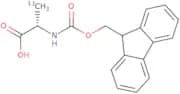
CAS:Fmoc-Ala-OH-3-13C is a versatile building block that can be used to synthesize a variety of compounds. It is an intermediate in the synthesis of more complex compounds and has been shown to possess high reactivity in peptide coupling reactions. Fmoc-Ala-OH-3-13C has a CAS number of 201489-21-6 and is a fine chemical that can be used for research, development, and other purposes.Formula:CC17H17NO4Purity:Min. 98 Area-%Color and Shape:PowderMolecular weight:312.32 g/mol