Silicones
Subcategories of "Silicones"
Found 172 products of "Silicones"
POLYDIMETHYLSILOXANE, TRIMETHYLSILOXY TERMINATED, 20,000,000 cSt
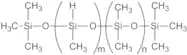
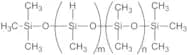
CAS:Color and Shape:LiquidMolecular weight:>500000(15-18% METHYLHYDROSILOXANE) - DIMETHYLSILOXANE COPOLYMER, TRIMETHYLSILOXANE TERMINATED, 25-35 cSt
CAS:Siloxane-Based Silane Reducing Agent
Organosilanes are hydrocarbon-like and possess the ability to serve as both ionic and free-radical reducing agents. These reagents and their reaction by-products are safer and more easily handled and disposed than many other reducing agents. The metallic nature of silicon and its low electronegativity relative to hydrogen lead to polarization of the Si-H bond yielding a hydridic hydrogen and a milder reducing agent compared to aluminum-, boron-, and other metal-based hydrides. A summary of some key silane reductions are presented in Table 1 of the Silicon-Based Reducing Agents brochure.
Pendant Functional Fluid; MethylHydrosiloxane-Dimethylsiloxane Copolymer, TMS Terminated
MethylHydrosiloxane copolymers are the primary cross linkers for 2-part vinyl-addition silicones and intermediates for functional copolymers.
Hydrogen dimethicone; Dimethylhydropolysiloxane; Dimethicone/methicone copolymer; Polysiloxanes dimethyl methyl hydrogen, Hydride functional polydimethylsiloxane; Siloxanes and silicones, dimethyl, methyl hydrogen
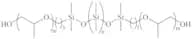
Viscosity: 25-35 cStMolecular Weight: 1,900-2,000 g/molMol% Hydride: 15-18Potential reducing agents in the mode of HMS-991 or HMS-998Extensive review of silicon based reducing agents: Larson, G.; Fry, J. L. "Ionic and Organometallic-Catalyzed Organosilane Reductions", Wipf, P., Ed.; Wiley, 2007Color and Shape:LiquidMolecular weight:1900-2000HYDROXYALKYL TERMINATED POLY(PROPYLENEOXY)-POLYDIMETHYLSILOXANE BLOCK COPOLYMER, 200-300 cSt
CAS:Color and Shape:Straw Amber LiquidMolecular weight:2500-3200SILANOL TERMINATED POLYDIMETHYLSILOXANE, 5,000c cSt
CAS:DMS-S35: Silanol Terminated PDMS, 5,000 cSt (Telechelic Functional Fluid)
Terminal silanol groups render polydimethylsiloxanes susceptible to condensation under both mild acid and base conditions. They are intermediates for most room temperature vulcanizeable (RTV) condensation cure silicones. The reactivity of silanol fluids is utilized in applications other than RTVs. Low viscosity silanol fluids are employed as filler treatments and structure control additives in silicone rubber compounding. Intermediate viscosity (1,000-10,000 cSt) fluids can be applied to textiles as durable fabric softeners. High viscosity silanol terminated fluids form the matrix component in tackifiers and pressure sensitive adhesives.
DMS-S35 Properties
Viscosity: 5,000 cStMolecular Weight: 49,000 g/molWt.% OH: 0.07OH (eq/kg): 0.039-0.043Color and Shape:LiquidMolecular weight:49000.0VINYL TERMINATED POLYDIMETHYLSILOXANE, Reduced Volatility, 500 cSt
CAS:DMS-V25R: Vinyl Terminated PDMS, Reduced Volatility, 500 cSt (Telechelic Functional Fluid)
Vinyl terminated polymers are most often employed in 2-part addition cure silicone elastomers.
DMS-V25R Properties
Viscosity: 500 cStMolecular Weight: 17,200 g/molWt.% Vinyl: 0.37-0.43Vinyl (eq/kg): 0.11-0.13Total Volatiles, 4 hrs@ 150°C: 0.2% maximumColor and Shape:LiquidMolecular weight:17200.0monoVINYL TERMINATED POLYDIMETHYLSILOXANE, asymmetric, 80-120 cSt
CAS:MCR-V21: monoVinyl Terminated Polydimethylsiloxane (Monofunctional Fluid)
Mono-vinyl functional PDMS macromers are monodisperse (low PDI) fluids that can be used as components in silicone gels and modifiers in release coatings.
MCR-V21 Properties
Viscosity: 80-120 cStMolecular Weight: 5,500-6,500 g/molRefractive Index: 1.403Color and Shape:LiquidMolecular weight:5500-6500CARBINOL (HYDROXYL) TERMINATED POLYDIMETHYLSILOXANE, 50-65 cSt
CAS:Color and Shape:LiquidMolecular weight:600-850[4-6% (MERCAPTOPROPYL)METHYLSILOXANE] - DIMETHYLSILOXANE COPOLYMER, 120-170 cSt
CAS:Color and Shape:Straw LiquidMolecular weight:6000-8000SILANOL TERMINATED POLYDIMETHYLSILOXANE, 90,000-150,000 cSt
CAS:DMS-S51: Silanol Terminated PDMS, 90,000-150,000 cSt (Telechelic Functional Fluid)
Terminal silanol groups render polydimethylsiloxanes susceptible to condensation under both mild acid and base conditions. They are intermediates for most room temperature vulcanizeable (RTV) condensation cure silicones. The reactivity of silanol fluids is utilized in applications other than RTVs. Low viscosity silanol fluids are employed as filler treatments and structure control additives in silicone rubber compounding. Intermediate viscosity (1,000-10,000 cSt) fluids can be applied to textiles as durable fabric softeners. High viscosity silanol terminated fluids form the matrix component in tackifiers and pressure sensitive adhesives.
DMS-S51 Properties
Viscosity: 90,000-150,000 cStMolecular Weight: 139,000 g/molWt.% OH: 0.02OH (eq/kg): 0.010-0.015Color and Shape:LiquidMolecular weight:139000.0(45-55% METHYLHYDROSILOXANE) - DIMETHYLSILOXANE COPOLYMER, TRIMETHYLSILOXANE TERMINATED, 10-15 cSt
CAS:Siloxane-Based Silane Reducing Agent
Organosilanes are hydrocarbon-like and possess the ability to serve as both ionic and free-radical reducing agents. These reagents and their reaction by-products are safer and more easily handled and disposed than many other reducing agents. The metallic nature of silicon and its low electronegativity relative to hydrogen lead to polarization of the Si-H bond yielding a hydridic hydrogen and a milder reducing agent compared to aluminum-, boron-, and other metal-based hydrides. A summary of some key silane reductions are presented in Table 1 of the Silicon-Based Reducing Agents brochure.
Pendant Functional Fluid; MethylHydrosiloxane-Dimethylsiloxane Copolymer, TMS Terminated
MethylHydrosiloxane copolymers are the primary cross linkers for 2-part vinyl-addition silicones and intermediates for functional copolymers.
Hydrogen dimethicone; Dimethylhydropolysiloxane; Dimethicone/methicone copolymer; Polysiloxanes dimethyl methyl hydrogen; Hydride functional polydimethylsiloxane; Siloxanes and silicones, dimethyl, methyl hydrogen
Viscosity: 10-15 cStMolecular Weight: 900-1,200 g/molMol% Hydride: 45-55Potential reducing agents in the mode of HMS-991 or HMS-992Extensive review of silicon based reducing agents: Larson, G.; Fry, J. L. "Ionic and Organometallic-Catalyzed Organosilane Reductions", Wipf, P., Ed.; Wiley, 2007Color and Shape:LiquidMolecular weight:900-1200(75-85% ETHYLMETHYLSILOXANE)-(15-25% 2-PHENYLPROPYLMETHYLSILOXANE) COPOLYMER, 1,200-1,600 cSt
CAS:Color and Shape:Light Amber LiquidMETHACRYLOXYPROPYL TERMINATED POLYDIMETHYLSILOXANE, 1,000 cSt
CAS:DMS-R31: Methacryloxypropyl Terminated PDMS, 1,000 cSt (Telechelic Functional Fluid)
Methacrylate and Acrylate functional siloxanes undergo the same reactions generally associated with methacrylates and acrylates, the most conspicuous being radical induced polymerization. Unlike vinylsiloxanes which are sluggish compared to their organic counterparts, methacrylate and acrylate siloxanes have similar reactivity to their organic counterparts. The principal applications of methacrylate functional siloxanes are as modifiers to organic systems. Upon radical induced polymerization, methacryloxypropyl terminated siloxanes by themselves only increase in viscosity. Copolymers with greater than 5 mole % methacrylate substitution crosslink to give non-flowable resins. Acrylate functional siloxanes cure greater than ten times as fast methacrylate functional siloxanes on exposure to UV in the presence of a photoinitiator such as ethylbenzoin.
Oxygen is an inhibitor for methacrylate polymerization in general. The high oxygen permeability of siloxanes usually makes it necessary to blanket these materials with nitrogen or argon in order to obtain reasonable cures.
DMS-R31 Properties
Viscosity: 1,000 cStMolecular Weight: 25,000 g/molRefractive Index: 1.404Color and Shape:LiquidMolecular weight:25000.0VINYL TERMINATED POLYDIMETHYLSILOXANE, 500 cSt
CAS:DMS-V25: Vinyl Terminated PDMS, 500 cSt (Telechelic Functional Fluid)
Vinyl terminated polymers are most often employed in 2-part addition cure silicone elastomers.
DMS-V25 Properties
Viscosity: 500 cStMolecular Weight: 17,200 g/molWt.% Vinyl: 0.37-0.43Vinyl (eq/kg): 0.11-0.13Color and Shape:LiquidMolecular weight:17200.0(4-6% METHYLHYDROSILOXANE) - DIMETHYLSILOXANE COPOLYMER, TRIMETHYLSILOXANE TERMINATED, 750-1,000 cSt
CAS:Siloxane-Based Silane Reducing Agent
Organosilanes are hydrocarbon-like and possess the ability to serve as both ionic and free-radical reducing agents. These reagents and their reaction by-products are safer and more easily handled and disposed than many other reducing agents. The metallic nature of silicon and its low electronegativity relative to hydrogen lead to polarization of the Si-H bond yielding a hydridic hydrogen and a milder reducing agent compared to aluminum-, boron-, and other metal-based hydrides. A summary of some key silane reductions are presented in Table 1 of the Silicon-Based Reducing Agents brochure.
Pendant Functional Fluid; MethylHydrosiloxane-Dimethylsiloxane Copolymer, TMS Terminated
MethylHydrosiloxane copolymers are the primary cross linkers for 2-part vinyl-addition silicones and intermediates for functional copolymers.
Hydrogen dimethicone; Dimethylhydropolysiloxane; Dimethicone/methicone copolymer; Polysiloxanes dimethyl methyl hydrogen, Hydride functional polydimethylsiloxane; Siloxanes and silicones, dimethyl, methyl hydrogen
Viscosity: 750-1,000 cStMolecular Weight: 20,000-25,000 g/molMol% Hydride: 4-6Potential reducing agents in the mode of HMS-991 or HMS-994Extensive review of silicon based reducing agents: Larson, G.; Fry, J. L. "Ionic and Organometallic-Catalyzed Organosilane Reductions", Wipf, P., Ed.; Wiley, 2007Color and Shape:LiquidMolecular weight:20000-25000(30-35% DODECYLMETHYLSILOXANE)-[7-10% HYDROXY(POLYETHYLENEOXY(6-9)PROPYL)METHYLSILOXANE]-(55-65% DIMETHYLSILOXANE) TERPOLYMER, 400-800 cSt
CAS:Color and Shape:LiquidMolecular weight:3000-6000(7.0-8.0% VINYLMETHYLSILOXANE) - DIMETHYLSILOXANE COPOLYMER, TRIMETHYLSILOXY TERMINATED, 800-1,200 cSt
CAS:VDT-731: Vinylmethylsiloxane-Dimethylsiloxane Copolymer, TMS Terminated (Pendant Functional Fluid)
Vinyl containing copolymers are used as crosslinkers in Pt and peroxide 2-part addition cure elastomers.
VDT-731 Properties
Viscosity: 800-1,200 cStMolecular Weight: 28,000 g/molVinyl (eq/kg): 0.9-1.1Color and Shape:LiquidMolecular weight:28000.0(6-7% METHYLHYDROSILOXANE) - DIMETHYLSILOXANE COPOLYMER, TRIMETHYLSILOXANE TERMINATED, 25-35 cSt
CAS:Siloxane-Based Silane Reducing Agent
Organosilanes are hydrocarbon-like and possess the ability to serve as both ionic and free-radical reducing agents. These reagents and their reaction by-products are safer and more easily handled and disposed than many other reducing agents. The metallic nature of silicon and its low electronegativity relative to hydrogen lead to polarization of the Si-H bond yielding a hydridic hydrogen and a milder reducing agent compared to aluminum-, boron-, and other metal-based hydrides. A summary of some key silane reductions are presented in Table 1 of the Silicon-Based Reducing Agents brochure.
Pendant Functional Fluid; MethylHydrosiloxane-Dimethylsiloxane Copolymer, TMS Terminated
MethylHydrosiloxane copolymers are the primary cross linkers for 2-part vinyl-addition silicones and intermediates for functional copolymers.
Hydrogen dimethicone; Dimethylhydropolysiloxane; Dimethicone/methicone copolymer; Polysiloxanes dimethyl methyl hydrogen, Hydride functional polydimethylsiloxane; Siloxanes and silicones, dimethyl, methyl hydrogen
Viscosity: 25-35 cStMolecular Weight: 1,900-2,000 g/molMol% Hydride: 6-7Potential reducing agents in the mode of HMS-991 or HMS-996Extensive review of silicon based reducing agents: Larson, G.; Fry, J. L. "Ionic and Organometallic-Catalyzed Organosilane Reductions", Wipf, P., Ed.; Wiley, 2007Color and Shape:LiquidMolecular weight:1900-2000VINYL TERMINATED POLYDIMETHYLSILOXANE, 4-8 cSt
CAS:DMS-V05: Vinyl Terminated PDMS, 4-8 cSt (Telechelic Functional Fluid)
Vinyl terminated polymers are most often employed in 2-part addition cure silicone elastomers.
DMS-V05 Properties
Viscosity: 4-8 cStMolecular Weight: 800 g/molWt.% Vinyl: 7-9Vinyl (eq/kg): 2.4-2.9Color and Shape:LiquidMolecular weight:800.0(11.0-13.0% VINYLMETHYLSILOXANE) - DIMETHYLSILOXANE COPOLYMER, TRIMETHYLSILOXY TERMINATED, 300,000-500,000 cSt
CAS:VDT-954: Vinylmethylsiloxane-Dimethylsiloxane Copolymer, TMS Terminated (Pendant Functional Fluid)
Vinyl containing copolymers are used as crosslinkers in Pt and peroxide 2-part addition cure elastomers.
VDT-954 Properties
Viscosity: 300,000-500,000 cStMolecular Weight: 225,000 g/molVinyl (eq/kg): 1.1-1.4Color and Shape:LiquidPHENYLMETHYLSILOXANE OLIGOMER
CAS:Thermal Silicone Fluid
High phenyl content fluids are utilized as heat-exchange fluids, dielectric coolants, impregnants for sintered metal bearing, and base oils for high temperature fluids. Low phenyl content fluids are utilized at lower temperatures than high phenylsilicones and find extended temperature service applications as lubricating oils for critical devices such as timers and systems involving rubber, plastic and aluminum
mating surfaces.
1,1,5,5-Tetraphenyl-1,3,3,5-tetramethyltrisiloxane
PhenylMethylsiloxane Oligomers - Diffusion FluidsViscosity, 25 °C: 35-40 cStViscosity, 99 °C:Pour-point, °C: -35Specific gravity: 1.07Refractive index: 1.556Surface tension: 37.3Molecular Weight: 485 g/molColor and Shape:LiquidMolecular weight:485.0




![[4-6% (MERCAPTOPROPYL)METHYLSILOXANE] - DIMETHYLSILOXANE COPOLYMER, 120-170 cSt](/_next/image/?url=https%3A%2Fstatic.cymitquimica.com%2Fproducts%2F3H%2Fthumb-webp%2FSMS-042.webp&w=3840&q=75)


![(30-35% DODECYLMETHYLSILOXANE)-[7-10% HYDROXY(POLYETHYLENEOXY(6-9)PROPYL)METHYLSILOXANE]-(55-65% D…](/_next/image/?url=https%3A%2Fstatic.cymitquimica.com%2Fproducts%2F3H%2Fthumb-webp%2FABE-3642.webp&w=3840&q=75)