Chromatin/Epigenetics
Chromatin/epigenetics inhibitors are compounds that modulate the structure and function of chromatin or interfere with epigenetic modifications, such as DNA methylation and histone modification. These inhibitors are essential tools for studying gene expression regulation and the role of epigenetics in diseases like cancer, neurological disorders, and developmental abnormalities. By targeting epigenetic processes, these inhibitors can alter gene expression patterns and offer new therapeutic avenues. At CymitQuimica, we provide a wide selection of high-quality chromatin/epigenetics inhibitors to support your research in molecular biology, genetics, and epigenetics.
Subcategories of "Chromatin/Epigenetics"
Found 2547 products of "Chromatin/Epigenetics"
Sort by
Purity (%)
0
100
|
0
|
50
|
90
|
95
|
100
STR-V-53
CAS:STR-V-53, an HDAC inhibitor (IC50 in nM), increases histone acetylation in tumor cells by inhibiting these enzymes, thereby regulating gene expression. STR-V-53 inhibits tumor growth and induces apoptosis [1].Formula:C21H30N4O8Color and Shape:SolidMolecular weight:466.48DS44470011
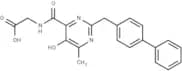
CAS:DS44470011 is an inhibitor of hypoxia-inducible factor prolyl hydroxylase (HIF-PHD) with oral bioavailability. It enhances the release of erythropoietin (EPO) from cells and is utilized in research related to renal anemia.Formula:C21H19N3O4Color and Shape:SolidMolecular weight:377.39PRMT5-IN-37
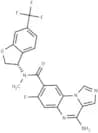
CAS:PRMT5-IN-37 (compound 29), an orally active inhibitor of PRMT5, is utilized for cancer research.Formula:C21H15F4N5O2Color and Shape:SolidMolecular weight:445.37HYDAMTIQ
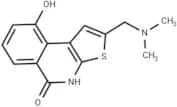
CAS:HYDAMTIQ, a PARP-1/2 inhibitor (IC 50 : 29-38 nM), exhibits a range of pharmacological effects including anticancer, anti-inflammatory, and ischemic protective properties. It effectively reduces pulmonary PARP activity and alleviates symptoms such as allergen-induced cough and dyspnea while also diminishing bronchial hyperresponsiveness to methacholine. Moreover, HYDAMTIQ shows potent tumor suppressor activity in various cancers such as ovarian, breast, prostate, pancreatic, and glioblastoma multiforme. Demonstrating in vivo efficacy, HYDAMTIQ has been tested in animal models for conditions like cerebral ischemia, asthma, and cancer [1].Formula:C14H14N2O2SColor and Shape:SolidMolecular weight:274.34Basroparib
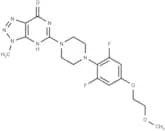
CAS:Basroparib is an inhibitor of ribose polymerase (PARP) and has shown antitumour effects.Formula:C18H21F2N7O3Color and Shape:SolidMolecular weight:421.4MDH1/2-IN-1
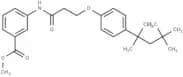
CAS:MDH1/2-IN-1 is an MDH1/2 inhibitor with IC50 values of 1.07 nM and 1.06 nM, respectively. It suppresses mitochondrial respiration and the HIF-1α pathway. MDH1/2-IN-1 exhibits significant antitumor potential and offers new avenues for developing drugs targeting cancer metabolism.Formula:C25H33NO4Color and Shape:SolidMolecular weight:411.534SRI-43265
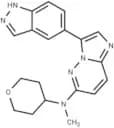
CAS:SRI-43265 (compound 40) inhibits the dimerization of human antigen R protein (HuR), which is involved in cancer and inflammation pathogenesis [1].Formula:C19H20N6OColor and Shape:SolidMolecular weight:348.4PRMT5-IN-18
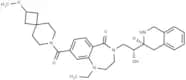
CAS:PRMT5-IN-18 (Compound 002) is a potent inhibitor of PRMT5 and can be used in the study of PRMT5-mediated diseases, such as tumours.Formula:C32H42N4O4Color and Shape:SolidMolecular weight:546.70NVS-BPTF-1
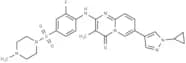
CAS:NVS-BPTF-1 is a specific inhibitor of bromodomain and PHD finger containing transcription factor (BPTF), exhibiting a dissociation constant (K_D) of 71 nM [1].Formula:C26H28FN7O3SColor and Shape:SolidMolecular weight:537.6115:0 PG sodium
CAS:15:0 PG sodium serves as an activator for the Protein Kinase C family and is an anionic phospholipid located in the membranes of mitochondria and microsomes. It plays a crucial role in the composition of pulmonary surfactants, especially within the membrane of the pulmonary lamellar bodies.Formula:C36H70NaO10PColor and Shape:SolidMolecular weight:716.90NSD2-PWWP1-IN-2
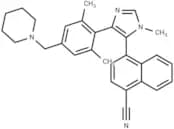
CAS:NSD2-PWWP1-IN-2 (compound 33) is a potent NSD2-PWWP1 inhibitor, exhibiting an IC50 value of 1.49 µM, indicating its potential utility in cancer research.Formula:C29H30N4Color and Shape:SolidMolecular weight:434.575PRMT5-IN-49
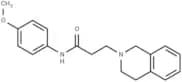
CAS:PRMT5-IN-49 (Compound 4b16) is an inhibitor of PRMT5.Formula:C19H22N2O2Color and Shape:SolidMolecular weight:310.39BRD4 Inhibitor-33
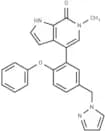
CAS:BRD4 Inhibitor-33 (example 13), a potent inhibitor of BRD4, is applicable in research related to both acute and chronic kidney diseases [1].Formula:C24H20N4O2Color and Shape:SolidMolecular weight:396.44EED ligand 1
EED ligand 1: potent PRC2 inhibitor targeting EED subunit.Formula:C19H19FN8OColor and Shape:SolidMolecular weight:394.41(1-Nitroethene-1,2-diyl)dibenzene
CAS:(1-Nitroethene-1,2-diyl)dibenzene (alpha-Nitrostilbene; α-Nitrostilbene) serves as an inhibitor of protein arginine methyltransferase 1 (PRMT1; histone H4 methylation assay with an IC50 of 11 μM). At concentrations of 10 and 100 μM, it also inhibits histone H4 methylation caused by PRMT8 but does not affect methylation of histone H3.1 induced by CARM1 or Set7/9.Formula:C14H11NO2Color and Shape:SolidMolecular weight:225.24PRMT5-IN-50
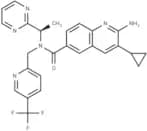
CAS:PRMT5-IN-50 is an orally active selective inhibitor of PRMT5, demonstrating good metabolic stability and low clearance in human liver microsomes. It inhibits SDMA/HCT116-MTAPdel and SDMA/HCT116-MTAPwt with IC50 values for symmetric arginine methylation inhibition at 1.0 and 536 nM, respectively, and antiproliferative IC50 values at 19 and 1620 nM, respectively. Additionally, PRMT5-IN-50 suppresses tumor growth in mice.Formula:C26H23F3N6OColor and Shape:SolidMolecular weight:492.496CM-414
CAS:CM-414: HDAC/PDE5 inhibitor, targeting Alzheimer’s, IC50s: PDE5 (60 nM), HDAC1/2/3/6. Reduces Aβ, pTau in mice, boosts cognition.Formula:C23H29N5O4Purity:98%Color and Shape:SolidMolecular weight:439.51BRD4-IN-7
CAS:BRD4-IN-7, also known as compound 120, acts as a BRD4 inhibitor.Formula:C29H24F2N4O3Color and Shape:SolidMolecular weight:514.52RL5a
CAS:RL5a (compound C23) is a novel inhibitor of SETD8.Formula:C17H19N3OColor and Shape:SolidMolecular weight:281.35PARP1-IN-29
CAS:PARP1-IN-29 is an orally active PARP-1 inhibitor with an IC50 of 6.3 nM. When labeled with [18F], PARP1-IN-29 can be utilized for positron emission tomography (PET) imaging, specifically targeting PARP-1 in tumors. This compound is useful in oncology and imaging studies, particularly for detecting PARP-1 activity in cancer.Formula:C18H16FN3O2Color and Shape:SolidMolecular weight:325.34